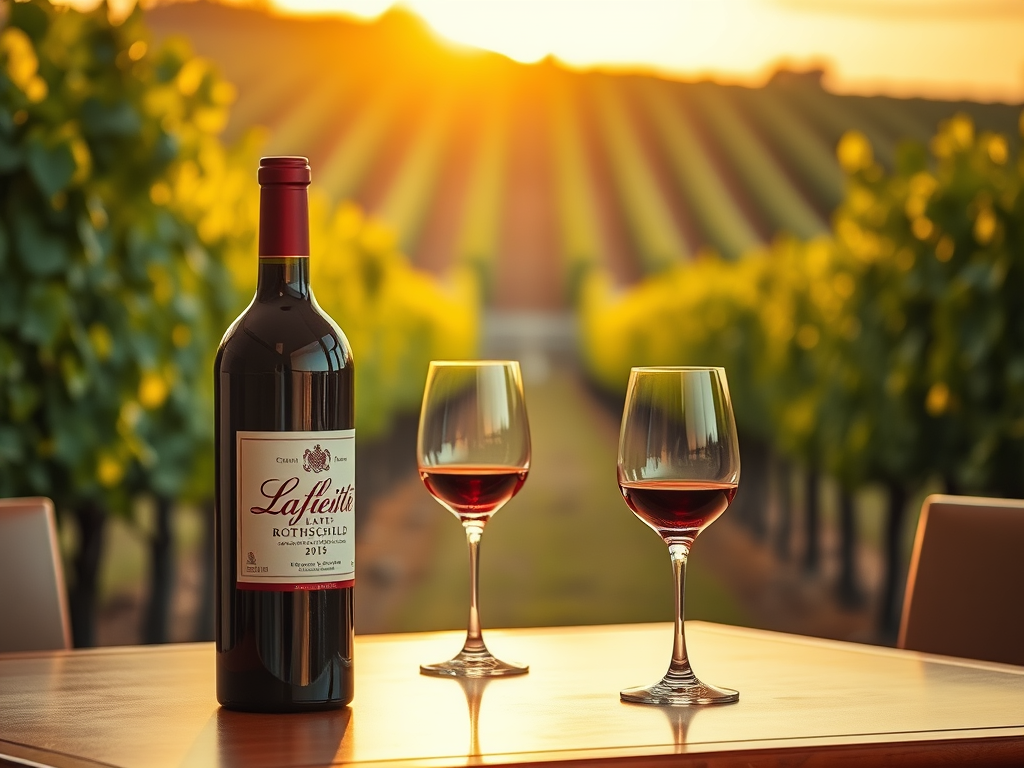
# Investing in Château Lafite Rothschild: A Luxurious and Profitable Top-Quality Wine
**Château Lafite Rothschild**, one of the five First Growths of Bordeaux, is synonymous with the world’s finest wines, with a history dating back to the 17th century. As a star brand in the Bordeaux **Médoc region**, Lafite is sought after by global investors and wine collectors due to its exceptional winemaking, rarity, and long-term stable appreciation potential.
This article will comprehensively analyze the value of investing in Château Lafite Rothschild, covering its investment returns, past market performance, collection costs, risk analysis, authenticity verification, and investment steps, helping potential investors gain a deeper understanding of this premium wine brand’s potential.
—
## 1. Investment Value
1. **Brand Endorsement of a Top Winery** Since being classified as a “First Growth” in the 1855 Bordeaux classification, Château Lafite Rothschild has maintained its high-end status in the luxury market. Its brand represents a combination of quality, rarity, and investment value.
2. **Stable Historical Performance** The price of Lafite has steadily increased over the past few decades, especially for rare vintages (such as 1982, 2000, and 2010), with investment returns far exceeding other asset classes like stocks and gold.
3. **Rarity** Château Lafite Rothschild produces only about 15,000-20,000 cases (12 bottles per case) annually, while global demand far exceeds supply, particularly in Asian markets (like China and Hong Kong). This supply-demand imbalance is a major driver of price appreciation.
4. **Exceptional Winemaking** Lafite is known for its delicate, elegant, and complex flavors with excellent aging potential. Many wines, after proper aging, have drinking value that surpasses their investment value.
5. **Cultural and Historical Value** Château Lafite Rothschild is not just a wine; it’s a work of art. Its history, brand story, and French wine culture make it “liquid gold” in the eyes of investors.
—
## 2. Investment Returns: Market Performance Over the Past Decade
Over the past decade, Château Lafite Rothschild has shown robust market performance, especially for certain high-quality vintages that have appreciated significantly. Here are some representative vintages:
1. **Lafite 2000 Vintage** – **2013**: Market price approximately £1,800 (~$2,300) per bottle. – **2023**: Market price reached £4,500 (~$5,900), an increase of over 150% in ten years.
2. **Lafite 1982 Vintage** – **2013**: Market price approximately £5,000 (~$6,500) per bottle. – **2023**: Market price nearly £15,000 (~$19,500), an increase of 200%.
3. **Lafite 2010 Vintage** – **2013**: Market price approximately £1,200 (~$1,560) per bottle. – **2023**: Market price rose to £3,000 (~$3,900), an increase of 150%.
4. **Average Performance of Lafite Rothschild** The **Liv-ex Fine Wine 100 Index** indicates that Lafite’s performance consistently surpasses the index average, with a long-term annualized return of approximately 8%-12%.
**Summary**: Château Lafite Rothschild not only demonstrates resilience against market fluctuations, but its rare vintages are also the core drivers of investment returns.
—
## 3. Investment Costs
1. **Entry-Level Vintages** – **Price Range**: £500-£1,000 (~$650-$1,300) per bottle. – **Representative Vintages**: 2014, 2017, 2018, etc.
2. **Mid to High-End Vintages** – **Price Range**: £1,500-£5,000 (~$2,000-$6,500) per bottle. – **Representative Vintages**: 2000, 2010, 2015, etc.
3. **Top Vintages** – **Price Range**: £10,000-£50,000 (~$13,000-$65,000) per bottle. – **Representative Vintages**: 1982, 1945, large formats from 2000.
4. **Other Costs** – **Storage Fees**: Approximately £10-£30 (~$13-$40) per bottle per year in a professional cellar. – **Insurance Costs**: Approximately 1% of the wine’s value per year. – **Transaction Fees**: Auction house or trading platform commissions usually range from 10%-20%.
—
## 4. Investment Risks
1. **Market Volatility** The wine market is influenced by economic cycles and consumer demand, leading to potential short-term price fluctuations.
2. **Vintage Risk** Different vintages of Lafite can vary significantly in performance, and investors need to understand the flavor characteristics and market demand of each vintage.
3. **Counterfeit Risks** Château Lafite Rothschild is a hotspot for high-priced counterfeits, so investors must exercise caution.
4. **Storage Risks** Improper storage can lead to deterioration of wine quality or damage to packaging, affecting its value.
4. **Private Collection Transactions** – Purchases through private collectors or wine communities, but extra caution is needed for authenticity verification.
—
## 6. Collection and Preservation Methods
1. **Professional Storage Conditions** – **Temperature**: Maintain a constant temperature of 12°C-15°C. – **Humidity**: About 70% to prevent cork drying or packaging damage. – **Environment**: Dark, vibration-free, and well-ventilated.
2. **Professional Wine Cellar Services** – Store wine in specialized wine warehouses, such as **Octavian Vaults** or **Vine International**.
3. **Insurance and Records** – Purchase specialized insurance for high-value wines, and retain purchase receipts and storage records.
—
## 7. Value Assessment Factors
1. **Vintage** Excellent vintages (e.g., 1982, 2000, 2010) have greater appreciation potential due to their quality and market demand.
2. **Bottle Size** Large formats (e.g., Magnum, Jeroboam) usually have higher investment value due to their rarity and better aging potential.
3. **Condition and Storage** Bottles that are intact and undamaged command higher values.
4. **Market Demand** The demand for Lafite in Asian markets (especially China) greatly influences its price.
—
## 8. Authenticity Verification Methods
1. **Check Labels and Anti-Counterfeiting Features** Château Lafite labels typically have complex embossing and laser anti-counterfeiting marks.
2. **Laser-Engraved Bottle Numbers** Bottles from vintages after 2009 have laser-engraved numbers on the bottom, verifiable through the winery.
3. **Wood Cases and Certificates** Original wooden cases and official certificates are essential for authenticity verification.
4. **Professional Appraisals** Hire professional appraisers or verify through official winery channels.
—
## 9. Investment Steps
1. **Market Research** Gather historical price trends and information on popular vintages of Lafite.
2. **Select Investment Products** Choose vintages and bottles with appreciation potential based on your budget.
3. **Choose Purchase Channels** Prioritize reliable auction houses or professional trading platforms.
4. **Proper Storage and Insurance** Ensure products are stored in a professional environment and insure high-value items.
5. **Regular Assessment and Sale** Based on market demand changes, choose the right timing to sell for returns.
—
## 10. Related Costs
1. **Purchase Costs**: Vary based on vintage and rarity, ranging from £500 to £50,000. 2. **Storage Costs**: Approximately £10-£30 per bottle per year. 3. **Insurance Costs**: Approximately 1% of the wine’s value per year. 4. **Transaction Fees**: Auction house fees typically range from 10%-20%. 5. **Appraisal Fees**: Approximately £100-£300 per appraisal.
—
## 11. Conclusion
Château Lafite Rothschild, with its exceptional quality, limited supply, and stable market demand, is the top choice for luxury investors and wine collectors. Whether you are seeking short-term appreciation or long-term collection, Lafite offers stable and significant returns. By selecting the right products, carefully verifying authenticity, and properly storing your investment, you can reap rewards and satisfaction in this premium wine market.
## 1. Core Functions of Liv-ex
1. **Global Wine Trading Market** – Liv-ex connects commercial wine merchants, auction houses, and retailers worldwide, providing a transparent and efficient trading platform. – Investors can buy and sell fine wines through Liv-ex, including top Bordeaux, Burgundy, Champagne, and other high-value wines.
2. **Price Data and Market Indices** – Liv-ex offers the most comprehensive wine price database globally, covering over **16,000+** wines, with daily updates on market prices. – The platform’s indices (such as **Liv-ex Fine Wine 100** and **Liv-ex Bordeaux 500**) serve as important benchmarks in the global wine investment market.
3. **Wine Logistics Services** – Liv-ex provides professional wine storage and logistics services, ensuring the safety and quality of traded wines during transportation.
4. **Membership Services** – Liv-ex membership is open only to professional wine merchants. Members enjoy services such as real-time trading, price data, and logistics support.
—
## 2. Major Indices of Liv-ex
Liv-ex provides several key market indices to help investors monitor the overall performance of the wine market:
1. **Liv-ex Fine Wine 100 Index** – Tracks the price changes of 100 representative fine wines globally, considered a main health indicator of the wine market. – Includes top Bordeaux, Burgundy, Champagne, and Italian wines.
2. **Liv-ex Bordeaux 500 Index** – Tracks the price performance of 500 top Bordeaux wines, including all First Growths (such as Château Lafite Rothschild and Château Margaux) and their second labels.
3. **Liv-ex Burgundy 150 Index** – Focuses on tracking the top Burgundy wines, reflecting market demand and price fluctuations in the region.
4. **Liv-ex Champagne 50 Index** – Tracks the performance of 50 top Champagne wines and is an important reference for the Champagne investment market.
—
## 3. Advantages of Liv-ex
1. **Market Transparency** – Liv-ex provides real-time market data, allowing investors to understand current price trends and market demand, avoiding unnecessary markups from intermediaries.
2. **Efficient Trading Process** – Investors can complete wine transactions instantly through Liv-ex, reducing trading time and costs.
3. **Global Market Coverage** – Liv-ex covers top wines from Bordeaux, Burgundy, Italy, Champagne, and the New World (such as the USA and Australia), suitable for diversified investment portfolios.
4. **Reliable Logistics and Storage** – Liv-ex offers professional wine storage and transportation solutions (such as transport insurance and temperature-controlled logistics), ensuring the quality and safety of wines.
5. **Data-Driven Decision Support** – Investors can access price trends, historical data, and market analysis through Liv-ex, helping them make informed investment decisions.
—
## 4. Membership Eligibility for Liv-ex
Liv-ex is not directly accessible to individual investors but is available for use by professional wine merchants and trading companies. Ordinary investors can indirectly utilize Liv-ex’s data and services through the following methods:
1. **Cooperating Brokers** – Partnering with Liv-ex members (such as professional wine merchants or investment companies) to access Liv-ex indices and trading data and participate in wine trading.
2. **Professional Investment Companies** – Many professional wine investment firms (like Cult Wines) conduct transactions through Liv-ex, allowing you to obtain investment advice and services from them.
—
## 5. Main Services of Liv-ex
1. **Trading Services** – Liv-ex’s trading platform allows members to buy and sell wine globally, providing real-time order matching capabilities.
2. **Pricing Data** – Liv-ex’s Wine Matcher tool helps members quickly find the most accurate market prices and compare the investment returns of different wines.
3. **Storage and Logistics** – Liv-ex offers global wine logistics support, including temperature-controlled transportation, professional storage, and delivery services.
4. **Market Analysis** – Liv-ex regularly publishes market reports analyzing wine investment trends, price movements, and popular wines.
—
## 6. How to Use Liv-ex for Investment?
If you are an individual investor, you can indirectly utilize Liv-ex’s services through the following methods:
1. **Choose Professional Merchants or Investment Institutions** – Many Liv-ex members (such as Berry Bros. & Rudd and Cult Wines) focus on servicing individual investors, helping you participate in wine trading on the Liv-ex platform.
2. **Use Liv-ex Data for Market Analysis** – Liv-ex’s indices (such as the Fine Wine 100) can help you assess market trends and choose wines with appreciation potential.
3. **Focus on Popular Wines and Vintages** – Use Liv-ex’s market reports and data to filter wines with high market demand (like Château Lafite Rothschild and Romanee-Conti).
—
## 7. Related Costs of Liv-ex
1. **Transaction Fees** – Liv-ex charges members a transaction fee, typically between 1% and 3% of the transaction amount (varying by membership level).
2. **Logistics and Storage Fees** – Professional storage and logistics services provided by Liv-ex incur additional charges, usually calculated per bottle or case.
3. **Membership Fees** – Liv-ex members must pay an annual membership fee, which varies based on membership type and service scope.
## 8. Conclusion
As a leading global wine trading platform, Liv-ex not only provides professional merchants with an efficient and transparent trading environment but also offers wine investors unparalleled market data and analytical tools. Through Liv-ex, investors can accurately understand market dynamics, filter wines with appreciation potential, and utilize its logistics services to ensure the quality and value of their wines.
While Liv-ex primarily targets professional members, individual investors can participate in transactions indirectly through partnering merchants or investment firms. For those looking to enter the premium wine investment market, Liv-ex provides indispensable support and assurance, making it the top choice for wine investment.