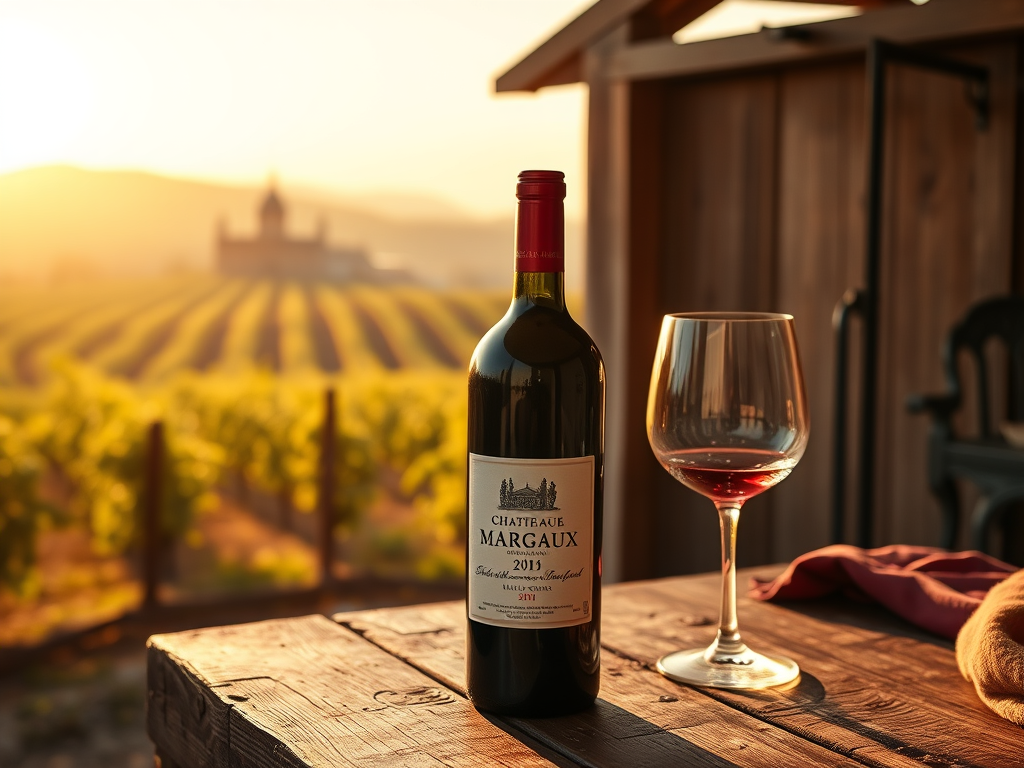
# Investing in Château Margaux: A Classic Red Wine Combining History and Luxury
**Château Margaux**, one of the five First Growths of Bordeaux, is a classic representative of investment-grade red wines, known for its elegant style, exceptional quality, and long history. Its wines offer not only an ultimate tasting experience but also a stable long-term investment opportunity. This article will comprehensively analyze the investment value, return performance, and associated risks of Château Margaux, helping you grasp the immense potential of wine investment.
—
## 1. Investment Value
1. **Brand Status and Historical Background** – Château Margaux is located in the village of Margaux on the left bank of Bordeaux, with a history dating back to the 16th century. It was classified as one of the five First Growths in 1855, becoming a symbol of Bordeaux wine. – Margaux has long been renowned for its delicate, elegant, and well-balanced style, earning the title “Queen of Bordeaux.”
2. **Scarcity and Market Demand** – With an annual production of only about 12,000 to 15,000 cases, its limited availability and high demand, especially in the Asian market, further enhance its investment value.
3. **Exceptional Quality and Aging Potential** – The wines of Château Margaux possess an extraordinary aging capacity, with many vintages remaining at their peak condition decades after bottling. – For example, the 1900 vintage is still regarded as one of the greatest wines of the 20th century.
4. **Cultural and Luxury Symbol** – Château Margaux represents not just the ultimate quality of red wine but also a luxurious lifestyle, symbolizing high-end collectibles and status.
—
## 2. Investment Returns: Market Performance Over the Past Decade
Château Margaux’s market value has steadily increased over the past decade, particularly for top vintages, which have shown remarkable price performance. Here are some representative return data:
1. **Margaux 2000 Vintage** – **Price in 2013**: Approximately £1,500 (about $1,950). – **Price in 2023**: Approximately £4,200 (about $5,460). – **Ten-Year Return Rate**: 180%.
2. **Margaux 1982 Vintage** – **Price in 2013**: Approximately £1,800 (about $2,340). – **Price in 2023**: Approximately £5,500 (about $7,150). – **Ten-Year Return Rate**: 205%.
3. **Margaux 2010 Vintage** – **Price in 2013**: Approximately £1,000 (about $1,300). – **Price in 2023**: Approximately £3,000 (about $3,900). – **Ten-Year Return Rate**: 200%.
4. **Overall Performance** – According to the **Liv-ex Fine Wine 100 Index**, Château Margaux’s annualized return rate has consistently been between 8% and 12%, making it a star asset in the wine investment market.
—
## 3. Investment Costs
1. **Entry-Level Vintages** – **Price Range**: £300-£800 (about $400-$1,050) per bottle. – **Representative Vintages**: Ordinary years such as 2014, 2017.
2. **Mid to High-End Vintages** – **Price Range**: £1,000-£3,000 (about $1,300-$3,900) per bottle. – **Representative Vintages**: High-quality years like 2005, 2009, 2010.
3. **Top Vintages** – **Price Range**: £5,000-£20,000 (about $6,500-$26,000) per bottle. – **Representative Vintages**: Classic years such as 1982, 1990, 2000.
4. **Other Costs** – **Storage Fees**: Professional cellar storage costs about £10-£30 (about $13-$40) per bottle per year. – **Insurance Costs**: Approximately 0.5%-1% of the wine’s value annually. – **Transaction Fees**: Auction house or trading platform fees typically range from 10%-20%.
—
## 4. Investment Risks
1. **Market Volatility** – While Château Margaux has shown stable long-term performance, short-term fluctuations may occur due to market demand and economic cycles.
2. **Vintage Risk** – Ordinary vintages have limited appreciation potential, while top vintages offer higher investment returns but come with higher purchase costs.
3. **Counterfeit Risk** – As a high-value wine, the issue of counterfeits is significant. Careful attention to purchasing channels and authenticity verification is essential.
4. **Storage Risk** – Improper storage could lead to spoilage or damage to the label, directly impacting investment value.
5. **Liquidity Risk** – Some vintages of Margaux may experience low market demand in the short term, affecting liquidity.
4. **Private Collection Transactions** – Trade through wine clubs or private collectors, but ensure thorough verification of authenticity.
—
## 6. Collection and Preservation Methods
1. **Professional Storage Conditions** – **Temperature**: Constant temperature of 12℃-15℃. – **Humidity**: Approximately 70%, to prevent cork drying or label dampness. – **Environment**: Avoid direct sunlight, vibrations, and unpleasant odors.
2. **Professional Cellar Storage** – Utilize professional cellar services (e.g., **Octavian Vaults**) to ensure the safety and quality of the wine.
3. **Insurance and Records** – Insure high-value wines and maintain purchase receipts, storage records, and transaction documents.
—
## 7. Value Assessment Factors
1. **Vintage** – Top vintages (e.g., 1982, 2000, 2010) have greater appreciation potential.
2. **Bottle Size** – Larger bottles (e.g., Magnum, Jeroboam) tend to have higher value due to scarcity and better aging potential.
3. **Condition and Storage** – Well-packaged wines with intact liquid quality are more attractive for investment.
4. **Market Demand** – The demand for Château Margaux in the Asian market is a significant driver of its price.
5. **Reputation of the Winery** – The brand value and market reputation of Château Margaux are crucial for price stability.
—
## 8. Authenticity Verification Methods
1. **Check the Label** – The design details on Château Margaux labels are clear, with fine printing and accurate vintage markings.
2. **Bottle and Seal** – Inspect the laser number on the bottle (for certain vintages) and ensure the seal is intact.
3. **Original Wooden Box and Documents** – Original boxes and official documents enhance the credibility of the authentic product.
4. **Professional Appraisal** – Hire professional agencies or verify authenticity through official winery channels.
—
## 9. Investment Steps
1. **Market Research** – Understand the historical price trends and market demand for popular vintages of Château Margaux.
2. **Select a Vintage** – Choose vintages with appreciation potential based on your budget.
3. **Choose a Purchase Channel** – Prioritize reputable auction houses or trading platforms to ensure transaction safety.
4. **Proper Storage** – Use professional cellar storage and regularly check the condition of the wines.
5. **Regular Evaluation and Sale** – With market changes, choose the right timing to sell for returns.
—
## 10. Associated Costs
1. **Purchase Costs** – Starting from £300 for ordinary vintages, up to £20,000 for top vintages.
2. **Storage Costs** – £10-£30 per bottle per year.
3. **Insurance Costs** – Approximately 0.5%-1% of the wine’s value annually.
4. **Transaction Fees** – Auction house or trading platform fees typically range from 10%-20%.
5. **Appraisal Fees** – Approximately £100-£300 per appraisal.
—
## 11. Conclusion
Château Margaux, with its long history, exceptional quality, and stable market performance, is an ideal choice for wine investors. Whether investing in top or ordinary vintages, Margaux demonstrates strong appreciation potential and cultural value. By selecting the right vintages, managing storage effectively, and planning transactions carefully, you can achieve stable wealth growth through this classic red wine.
# Identifying Counterfeit Château Margaux: A Comprehensive Guide
The topic of identifying counterfeit **Château Margaux** is crucial, as it is one of the world’s most well-known red wines and often a target for forgers. Below is a detailed guide for recognizing counterfeits, focusing on the inspection of labels, bottles, seals, and other details. I will provide a narrative description, and I recommend considering adding visual content to your website that combines text and images, as the following information is suitable for creating such materials.
—
## I. Key Points for Identifying Counterfeits
### 1. **Label Identification** Château Margaux’s labels are intricately designed and printed, making them difficult for counterfeiters to replicate. Here are some key points to consider:
– **Font and Typography** – The font on the label should be clear and free from blurriness, especially for the words “Château Margaux.” – Counterfeit labels often have discrepancies in font spacing, alignment, or blurry edges.
– **Year Markings** – Each vintage label has slight design variations; the year should be centered and free from printing defects. – Compare with official label images (available on the Château Margaux website or professional wine platforms) to check for font consistency.
– **Paper Quality** – Genuine labels have a delicate paper texture with a soft sheen. – Counterfeit labels may use inferior paper that is overly reflective or looks stiff.
– **Special Elements for Certain Years** – Some vintages of Château Margaux may include anti-counterfeiting marks (like laser numbers or embossed seals); check for their presence.
—
### 2. **Bottle Inspection** – **Bottle Shape and Weight** – Château Margaux bottles are usually heavier than standard red wine bottles, with a thicker and smoother base. – Counterfeits may use lighter or irregularly shaped bottles.
– **Laser Numbering** – Starting from the 1996 vintage, Château Margaux features a unique laser number on the bottle, typically located near the neck or base. – Counterfeit bottles may lack this laser number or have incorrectly placed numbers that do not match official records.
– **Glass Quality** – Genuine bottles have uniform glass quality, free from bubbles. – Counterfeit bottles may exhibit bubbles, blemishes, or uneven glass textures.
—
### 3. **Seal Inspection** – **Cork** – The cork for Château Margaux is printed with the vintage and winery name, with clear and durable lettering. – Counterfeit wines may use shorter or lower-quality corks, with blurry or mismatched printing.
– **Capsule** – Genuine capsules are well-designed, with a refined texture and uniform color. – Some vintages may have the winery’s mark or laser anti-counterfeiting features; counterfeit wines usually lack these details.
– **Signs of Re-sealing** – If purchased second-hand, check for signs of re-sealing (such as irregular capsule edges or tape).
—
### 4. **Packaging and Additional Documentation** – **Original Wooden Boxes** – The original wooden box for Château Margaux will have the vintage, winery logo, and detailed information printed on it, with a smooth and sturdy structure. – Counterfeit boxes may use inferior materials with blurred or unclear printing.
– **Authentication Certificates** – Certain vintages of Château Margaux come with official authentication certificates; check that the laser number matches the bottle.
—
## II. Special Anti-Counterfeiting Features by Vintage
1. **1996 and Later** – Introduction of laser engraving, featuring a unique laser number on the bottle. – Capsules may have year markings.
2. **2000 Vintage** – The label for this vintage uses a special metallic foil design, featuring a metallic sheen that is hard to replicate. – Counterfeit metallic foils may not achieve the same delicate texture as the original.
3. **2015 Vintage** – Commemorating the winery’s 200th anniversary, this label has a unique design using special engraving techniques. – Key identification point: check for clarity in the engraved details.
—
## III. Additional Practical Tips for Identifying Counterfeits
1. **Refer to Official Resources** – The Château Margaux website or professional wine platforms (like Liv-ex, Wine-Searcher) provide genuine label and vintage databases for reference.
2. **Verify the Source** – Ensure the wine’s purchasing source is reputable, such as international auction houses, professional wine trading platforms, or authorized dealers.
3. **Seek Professional Authentication** – For high-value vintages (like 1982, 2000), consider consulting professional wine authentication services to ensure the wine’s authenticity.
4. **Check Liquid Condition** – Note the color of the liquid inside the bottle (should be ruby red or garnet), and check the fill level (a low level may indicate improper storage).
—
## IV. How to Create Visual Content?
To make your website content more appealing to investors, consider the following approaches:
1. **Comparison Images** – Provide high-quality comparison images of genuine and counterfeit Château Margaux labels, bottles, and capsules with annotations highlighting differences.
2. **Vintage Feature Display** – Create charts for each important vintage (like 1982, 1996, 2000, 2015) showcasing their anti-counterfeiting features and market values.
3. **Video Tutorials** – Film a video demonstrating how to check labels, corks, and laser numbers, providing a dynamic educational guide.
4. **Interactive Content** – Add an interactive “Real vs. Fake” module allowing users to learn counterfeit identification skills through image comparisons.
—
## V. Conclusion
Counterfeit issues represent one of the main risks when investing in premium wines like Château Margaux, but by familiarizing yourself with the details of labels, bottles, and seals, and utilizing official resources and professional channels, you can effectively mitigate these risks. It is advisable for investors to thoroughly research authentic features before purchasing and to remain cautious throughout the transaction process. If you need further assistance, consider seeking help from wine authentication experts to ensure the safety of your investment.