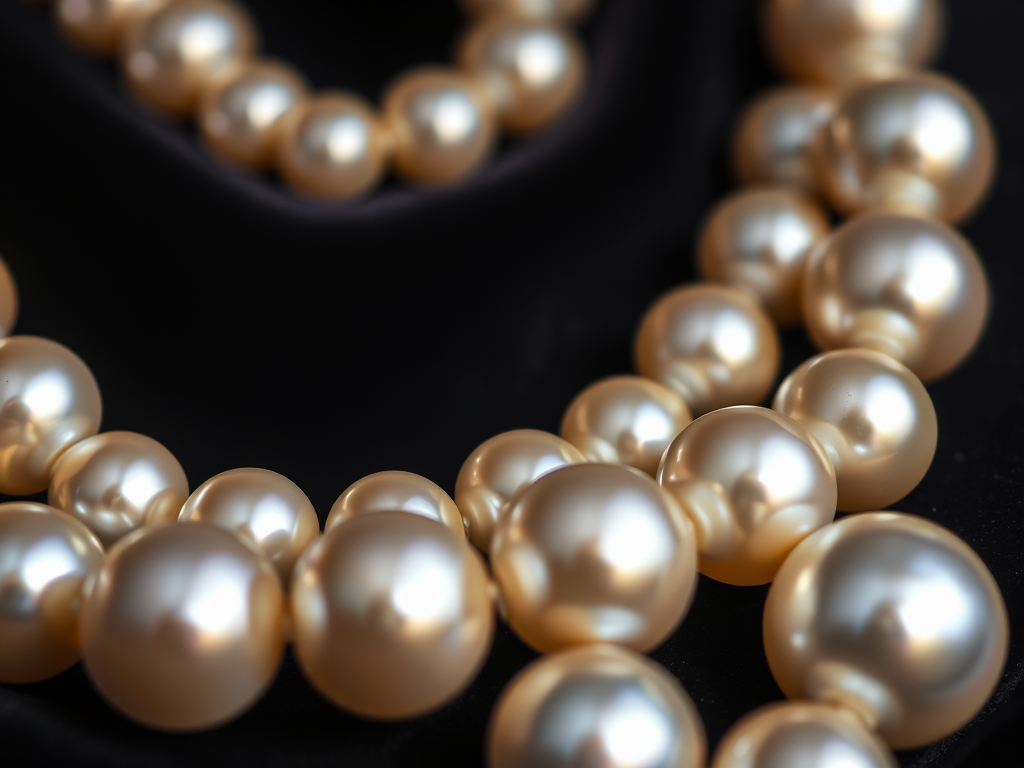
# **Natural Pearl Investment Guide: Value and Potential of a Rare Treasure**
Natural pearls, with their unique natural beauty, rarity, and historical value, have long been a highly sought-after asset in the jewelry market. As part of jewelry investment, natural pearls not only possess high collectible value but can also provide stable returns in an investment portfolio. This article will explore the investment value of natural pearls, past market performance, investment costs, risks, channels, collection and preservation methods, value assessment factors, authentication methods, investment steps, and other key information to help investors fully understand this rare treasure.
—
## **1. Investment Value of Natural Pearls**
### **1. Extreme Rarity** Natural pearls are formed by mollusks in a completely natural environment, unlike common cultured pearls, which rely on human intervention and have very low production. Due to overfishing and environmental pollution, the supply of natural pearls is becoming increasingly scarce, as most pearls on the market are cultured, making natural pearls a highly valuable investment asset.
### **2. Historical and Cultural Value** Natural pearls have symbolized royalty and nobility since ancient times, with their value traceable thousands of years back. For instance, Cleopatra of Egypt and Queen Elizabeth I of England were both enamored with pearls. This historical legacy bestows upon natural pearls immeasurable cultural and emotional value.
### **3. High-End Market Demand** Due to their unique shapes, luster, and colors, natural pearls have become the focus of high-end jewelry auctions. With the growth of the global high-net-worth individuals (HNWIs), the demand for rare natural pearls continues to rise, driving their prices upward.
—
## **2. Investment Returns of Natural Pearls: Market Performance Over the Past Decade**
### **1. Steady Price Growth** According to market data, the prices of natural pearls have steadily increased over the past decade, with an average annual growth rate of about **5%-10%**, particularly for rare high-quality pearls, which have seen even more significant price increases.
– **Top Natural Pearl Necklaces**: Prices in the auction market have climbed from **$500,000** to over **$10,000,000**. – **Single Rare Natural Pearls**: According to data from Sotheby’s and Christie’s, the prices of natural pearls weighing over 10 carats have doubled in the past decade.
### **2. Highlight Performance in the Auction Market** – **2018: Marie Antoinette’s Pearl Necklace** – Sale Price: Approximately **$36 million** – Significance: The sale price set a record for natural pearls at auction, demonstrating the incredible appreciation potential of rare pearls.
– **2020: La Peregrina Pearl** – Sale Price: Approximately **$11.5 million** – Significance: This pearl, with a history of 500 years, showcased the cultural and financial value of natural pearls.
—
## **3. Investment Costs of Natural Pearls**
### **1. Purchase Costs** The price of natural pearls is determined by various factors, including size, shape, color, luster, and historical value. Here are the market reference price ranges: – **Small Natural Pearls (5-8 mm in diameter)**: Approximately **$5,000-$30,000** each. – **Large Natural Pearls (over 10 mm in diameter)**: Approximately **$50,000-$500,000** or more each. – **Top Natural Pearl Necklaces**: Ranging from **$100,000** to over **$10,000,000**.
### **2. Other Associated Costs** – **Certification Fees**: Natural pearls should come with an authoritative certification, costing about **$500-$2,000**. – **Insurance Costs**: Annual insurance costs are typically **0.5%-1%** of the pearl’s value. – **Auction Fees**: Auction houses usually charge a commission of about **10%-25%** when buying or selling natural pearls.
—
## **4. Investment Risks**
### **1. Market Liquidity** The market for natural pearls is relatively niche, with lower liquidity compared to other jewelry assets like diamonds. Selling natural pearls may take a considerable amount of time, especially for high-priced pearls.
### **2. Risk of Counterfeits** The market is rife with counterfeit natural pearls or treated pearls, so investors must be cautious and ensure that the pearls they purchase come with authoritative certification.
### **3. Short-Term Price Volatility** Although the prices of natural pearls have been rising over the long term, they may experience fluctuations in the short term due to market demand or economic conditions.
—
## **5. Investment Channels**
### **1. Top Auction Houses** – **Christie’s** and **Sotheby’s** are the primary channels for purchasing natural pearls, offering rigorously certified high-quality natural pearls.
### **2. Professional Jewelry Brokers** – Rare natural pearls can be obtained through reputable jewelry brokers or private trading markets.
### **3. High-End Jewelry Brands** – Some well-known jewelry brands (such as **Cartier** and **Harry Winston**) sell carefully selected natural pearls, though prices typically include a brand premium.
—
## **6. Collection and Preservation Methods**
### **1. Proper Storage** Natural pearls are easily affected by humidity, temperature, and acidic substances; they should be stored in a professional jewelry box, avoiding direct sunlight and contact with chemicals.
### **2. Regular Maintenance** Natural pearls require regular cleaning and maintenance to retain their luster and structural integrity.
### **3. Purchase Insurance** Insurance should be purchased specifically for natural pearls to cover risks such as theft or damage.
—
## **7. Value Assessment Factors**
### **1. Size** The size of natural pearls is highly correlated with their value; the larger the diameter, the higher the value.
### **2. Color** White, pink, gold, and black natural pearls are all favored in the market, with those that are rich in color and uniform in appearance being the most valuable.
### **3. Luster** Luster is a key indicator of the quality of natural pearls, with a strong luster representing higher quality.
### **4. Shape** Naturally round natural pearls are the rarest and most valuable.
### **5. Origin** Natural pearls from the Persian Gulf or other historically significant sources are more attractive due to their rarity and historical value.
—
## **8. Authentication Methods**
1. **X-Ray Examination** – Use X-rays to examine the internal structure of the pearl to determine whether it is naturally formed.
2. **Authoritative Certification** – Ensure that the pearl comes with certification from GIA (Gemological Institute of America) or SSEF (Swiss Gemmological Institute).
3. **Visual Inspection** – Natural pearls typically exhibit tiny irregular textures, while cultured pearls are smoother and more uniform.
—
## **9. Investment Steps**
1. **Market Research** – Understand the market trends and value assessment standards for natural pearls.
2. **Choose Channels** – Purchase through auction houses or reputable jewelry brokers.
3. **Verify Certification** – Ensure that the pearls you buy come with authoritative certification.
4. **Purchase Insurance** – Buy dedicated insurance for the pearls to ensure investment security.
5. **Long-Term Holding** – Natural pearls are suitable for long-term investment; it is recommended to hold them for at least **5-10 years**.
—
## **10. Associated Costs and Regulations**
### **1. Auction Commissions** – Auction houses typically charge **10%-25%** in commissions when buying or selling natural pearls.
### **2. Tax Considerations** – Selling natural pearls may incur capital gains tax, with specific rates depending on the country.
### **3. Import and Export Regulations** – Certain countries have specific regulations regarding the import and export of pearls, requiring proof of origin.
—
## **11. Other Important Information**
### **1. Environmental Protection and Sustainability** – The harvesting of natural pearls has significant environmental impacts, and investors should pay attention to sustainability and ethical sourcing.
### **2. Investment Diversification** – Natural pearls can serve as part of a jewelry investment portfolio, combined with diamonds, colored gemstones, and other assets to diversify investment risk.
—
## **12. Conclusion**
With their rarity, historical value, and beautiful natural properties, natural pearls have become a significant choice in the jewelry investment market. Whether you are a high-net-worth investor or a jewelry collector, natural pearls can provide stable returns and unmatched allure to your investment portfolio. By selecting high-quality pearls, properly storing them, and holding them long-term, you can fully enjoy the growth potential of this rare treasure.
The following are some trusted **natural pearl certification organizations** that are recognized globally for their authority, equipped with professional tools and experience to accurately verify the authenticity and quality of natural pearls:
—
## **1. Globally Recognized Natural Pearl Certification Organizations**
### **1. GIA (Gemological Institute of America)** – **Overview**: GIA is one of the most prestigious gem certification organizations in the world, offering authoritative natural pearl certification services. – **Services**: – Confirm whether a pearl is naturally formed. – Identify the source of the pearl (e.g., saltwater or freshwater). – Provide detailed certification, including information on color, size, luster, shape, and quality. – **Advantages**: – Uses X-ray tomography technology for accurate detection of the internal structure of natural pearls. – Globally recognized certification standards. – **Website**: [https://www.gia.edu](https://www.gia.edu)
—
### **2. SSEF (Swiss Gemmological Institute)** – **Overview**: SSEF is a high-end gem and pearl certification organization located in Switzerland, known for its professionalism and precision in the international market. – **Services**: – Provide complete certification reports for natural pearls, including formation methods, color, luster, and shape. – Distinguish between natural and cultured pearls, as well as treated pearls. – Issue scientifically advanced certification. – **Advantages**: – Based on advanced scientific technologies, including X-ray imaging and spectral analysis. – Focuses on high-value pearl certification, suitable for top pearl investors and collectors. – **Website**: [https://www.ssef.ch](https://www.ssef.ch)
—
### **3. Gübelin Gem Lab** – **Overview**: Gübelin is a historic gem certification organization that specializes in high-end jewelry and natural pearl certification. – **Services**: – Test whether pearls are naturally formed. – Provide detailed analysis of pearl characteristics (e.g., size, luster, shape, and color). – Confirm the geographical origin and growth environment of pearls. – **Advantages**: – Leading in high-end jewelry and rare natural pearl certification. – Certificates issued are highly trusted in the international market. – **Website**: [https://www.gubelingemlab.com](https://www.gubelingemlab.com)
—
### **4. NGTC (National Gemstone Testing Center, China)** – **Overview**: As the most authoritative gem and pearl certification organization in China, NGTC provides international standard pearl certification services. – **Services**: – Distinguish between natural and cultured pearls. – Provide complete quality reports for pearls, including color, luster, and shape. – Issue certification that meets international standards. – **Advantages**: – Highly trusted in the Asian market, especially suitable for investors in China and surrounding areas. – Equipped with advanced testing facilities and technologies. – **Website**: [http://www.ngtc.com.cn](http://www.ngtc.com.cn)
—
### **5. AnchorCert Gem Lab** – **Overview**: AnchorCert is a renowned gem and pearl certification organization in the UK, associated with the Birmingham Assay Office, providing professional pearl analysis services. – **Services**: – Test the naturalness of pearls (natural or cultured). – Provide detailed quality reports for pearls, including color, luster, and shape. – Test whether pearls have been treated. – **Advantages**: – Highly reputable in the UK and European markets. – Certificates issued meet international standards. – **Website**: [https://www.anchorcertgemlab.com](https://www.anchorcertgemlab.com)
—
### **6. Lotus Gemology (Thailand)** – **Overview**: Lotus Gemology is a professional gem research institute located in Thailand, focusing on high-end jewelry and pearl certification. – **Services**: – Provide certification and analysis for natural pearls. – Confirm the naturalness of pearls and whether they have been treated. – Offer clear, concise, and transparent certification. – **Advantages**: – Utilizes scientific techniques and user-friendly report formats for investor understanding. – Particularly trusted in the Asian market. – **Website**: [https://www.lotusgemology.com](https://www.lotusgemology.com)
—
### **7. CIBJO (World Jewellery Confederation)** – **Overview**: CIBJO is an international standard-setting organization for the jewelry industry. Although it does not provide direct certification services, its standards are adopted by many certification organizations. – **Advantages**: – Its standards are widely accepted in the global jewelry industry and can serve as complementary references for certification organizations. – **Website**: [https://www.cibjo.org](https://www.cibjo.org)
—
## **How to Choose a Certification Organization?**
1. **Confirm the Organization’s Professionalism and Reputation**: – Choose recognized authorities like GIA or SSEF, whose certificates are highly trusted in the international market.
2. **Select Based on Region**: – If you are in the Asian market, NGTC and Lotus Gemology are reliable choices. – If you are in Europe, SSEF and Gübelin are top choices. – American investors should prefer GIA.
3. **Check the Details of the Certification**: – Ensure the certificate clearly states the naturalness of the pearl, whether it has been treated, and other key characteristics (e.g., color, luster, size, and shape).
4. **Consider Testing Technologies**: – Prioritize organizations that use advanced technologies (e.g., X-ray and spectral analysis) to ensure the accuracy of the certification results.
—
## **Conclusion**
Choosing a reliable certification organization is a crucial step in investing in natural pearls. Certification services provided by international authorities like GIA, SSEF, and Gübelin not only confirm the authenticity of pearls but also assess their quality and value in detail. These certification reports can safeguard your investment decisions and enhance the market liquidity of pearls in future sales. By selecting the right certification organization, you will lay a solid foundation for your investment in natural pearls.