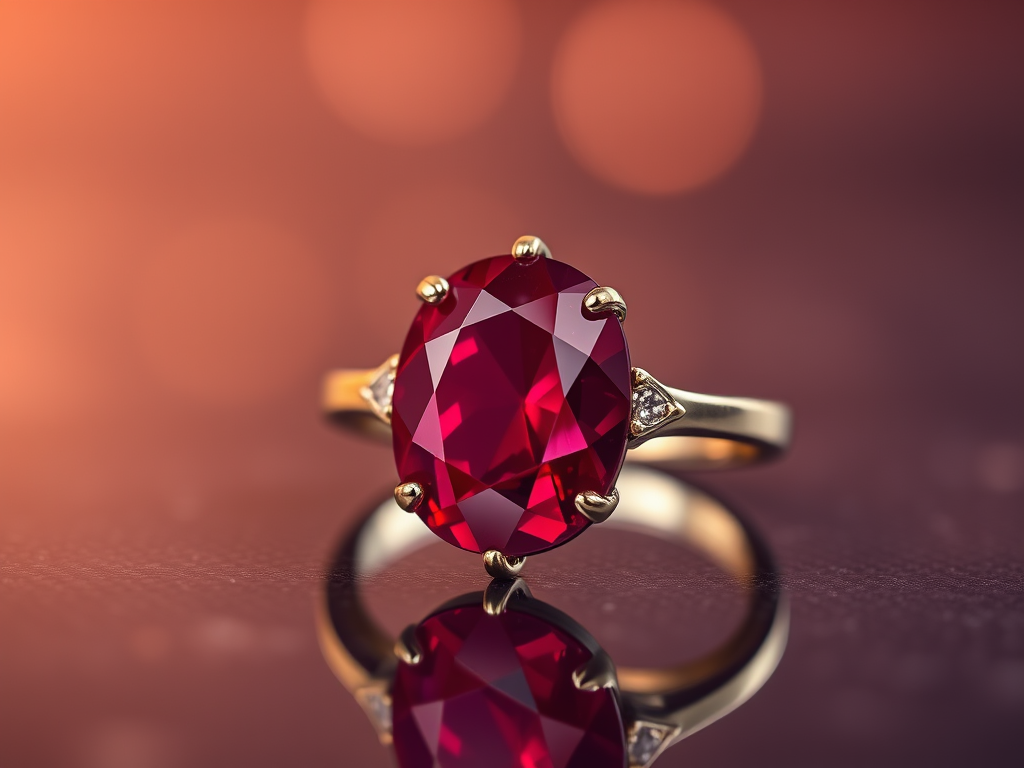
# **Ruby Investment Guide: The Scarcity and Market Potential of Burmese Rubies**
Ruby, known as the “King of Colored Gemstones,” is celebrated for its vivid color, exceptional rarity, and profound cultural significance, making it a favorite in the high-end jewelry investment market. Among rubies, **Burmese rubies** are regarded as the finest in the world due to their unique “pigeon blood red” hue and superior quality. Whether for collection or investment, Burmese rubies attract global investors with their stable market appreciation potential and rarity.
This article provides a comprehensive analysis of the investment value of Burmese rubies, their market performance over the past decade, associated costs, risks, investment channels, preservation methods, value assessment factors, authenticity identification, and other relevant information to help investors make informed decisions in ruby investments.
—
## **1. The Investment Value of Rubies**
### **1.1 Scarcity and High Demand** – **Scarcity**: Ruby production is significantly lower than other gemstones (e.g., diamonds, sapphires). Burmese rubies, known for their vivid “pigeon blood red” color and fluorescence, are considered the most prized among rubies. – **High Demand**: Rubies symbolize love, passion, and power, making them especially popular in Asian and Middle Eastern markets, where demand remains robust.
### **1.2 Historical and Cultural Value** – Rubies have been revered as the “stone of kings” since ancient times, symbolizing power and wealth. In regions like India, Myanmar, and China, rubies are believed to offer protection and bring prosperity, further enhancing their market value.
### **1.3 Preservation of Value and Appreciation Potential** – **Inflation Resistance**: As a rare asset, rubies maintain their value even during global economic fluctuations and inflationary periods. – **Long-Term Appreciation**: The price of Burmese rubies has steadily increased over the decades. High-quality pigeon blood red rubies, in particular, have shown appreciation rates far exceeding other gemstones.
—
## **2. Ruby Investment Returns: Market Performance Over the Past Decade**
### **2.1 Steady Global Price Growth** – Market data shows that ruby prices have risen at an average annual growth rate of **8%-12%** over the past decade. For top-tier Burmese rubies, the increase has exceeded **15%**. – **Pigeon Blood Rubies**: These rubies, noted for their rich color and exceptional quality, frequently set records at auctions, with particularly significant price growth.
### **2.2 Highlights from Auction Markets** – **2015: A 5.04-carat Pigeon Blood Ruby Ring** – Sold for: **$11.8 million** (Christie’s Auction House). – Price: Over **$2.3 million per carat**, setting a benchmark for premium rubies.
– **2020: A 15.04-carat Burmese Ruby Ring** – Sold for: **$14.2 million** (Sotheby’s Auction House). – Price: The per-carat value continued to rise, demonstrating strong market demand for top-tier Burmese rubies.
### **2.3 Long-Term Investment Returns** – For example, a 1-carat pigeon blood ruby priced at **$50,000** in 2010 reached over **$150,000** by 2023, nearly tripling in value over the period.
—
## **3. Ruby Investment Costs**
### **3.1 Purchase Costs** Ruby prices vary based on quality, size, and origin. Below are market reference prices: – **Top-tier Pigeon Blood Rubies (Burmese origin)**: – Typically range from **$100,000 to $500,000 per carat**, depending on specific quality. – **High-quality Rubies (Burmese or Mozambican origin)**: – Prices range from **$20,000 to $50,000 per carat**. – **Mid-range Rubies**: – Prices range from **$5,000 to $20,000 per carat**.
### **3.2 Associated Costs** – **Certification Fees**: Ruby certification costs range from **$200 to $1,000**, with higher fees for detailed analyses (e.g., origin reports). – **Insurance Fees**: Annual insurance cost is typically **0.5%-1%** of the ruby’s value. – **Auction or Transaction Fees**: Auction houses charge **10%-25%** of the final sale price as commission.
—
## **4. Risks of Ruby Investment**
### **4.1 Risks of Counterfeits and Treated Stones** – The market is flooded with treated rubies (e.g., glass-filled or heat-treated rubies), which have significantly lower value than natural rubies. Investors should exercise caution.
### **4.2 Market Volatility** – While top-tier ruby prices exhibit long-term growth, short-term fluctuations may occur due to economic conditions or changes in market demand.
### **4.3 Liquidity Risks** – High-value rubies have low market liquidity, and selling them may take time, particularly in periods of economic downturn.
—
## **5. Investment Channels for Rubies**
### **5.1 Auction Houses** – **Christie’s** and **Sotheby’s** are leading global auction houses offering certified high-quality rubies. – **Advantages**: Guaranteed provenance and quality, with high market recognition.
### **5.2 High-End Jewelry Brands** – Prestigious brands like **Cartier** and **Van Cleef & Arpels** often feature high-quality ruby jewelry, accompanied by authoritative certification.
### **5.3 Professional Gemstone Markets** – Gemstone trading hubs in Myanmar, Switzerland, and Thailand are key sources for ruby investments. However, investors must carefully select reputable sellers.
### **5.4 Private Transactions and Jewelry Brokers** – Private transactions through reputable jewelry brokers are an option for investors seeking rare rubies.
—
## **6. Preservation and Care of Rubies**
### **6.1 Proper Storage** – Rubies should be stored away from direct sunlight and contact with harder gemstones (e.g., diamonds). A professional jewelry box is recommended.
### **6.2 Regular Maintenance** – Clean rubies regularly to prevent dust and oil from dulling their luster.
### **6.3 Insurance** – Purchase specialized insurance to protect high-value rubies against risks such as theft and fire.
—
## **7. Key Factors in Ruby Value Assessment**
### **7.1 Color** – The most valuable rubies exhibit a “pigeon blood red” color, characterized by intense, saturated, and uniform hues.
### **7.2 Clarity** – Natural rubies often contain inclusions, but the fewer and less noticeable they are, the higher the gem’s value.
### **7.3 Cut** – A well-cut ruby enhances its brilliance and fire, increasing its overall value.
### **7.4 Carat Weight** – Larger rubies are more valuable. Top-tier rubies over 5 carats have significantly higher appreciation potential.
### **7.5 Origin** – Burmese rubies are highly regarded for their unique color and quality, commanding the highest market reputation.
—
## **8. Methods for Authenticity Identification**
### **8.1 Professional Certification** – Choose authoritative institutions like **GIA (Gemological Institute of America)** or **GRS (GemResearch Swisslab)** to verify a ruby’s authenticity and origin.
### **8.2 Testing Techniques** – Use magnification, spectroscopy, or UV light to examine a ruby’s internal structure and color characteristics.
### **8.3 Detecting Treated Stones** – Identify heat-treated or glass-filled rubies, as their value is significantly lower than natural rubies.
—
## **9. Steps for Ruby Investment**
1. **Understand the Market**: Research ruby quality grading, price trends, and market demand. 2. **Select Channels**: Purchase high-quality rubies through auction houses or reputable jewelers. 3. **Authenticate**: Ensure rubies come with authoritative certification. 4. **Proper Storage and Insurance**: Store in a safe environment and purchase specialized insurance. 5. **Long-Term Holding**: Rubies are best suited for long-term investments, with a recommended holding period of **5-10 years**.
—
## **10. Related Costs and Regulations**
### **10.1 Auction Fees** – Auction houses typically charge a **10%-25%** commission on the final sale price.
### **10.2 Tax Considerations** – Selling rubies may be subject to capital gains tax, depending on the country’s tax laws.
### **10.3 Import and Export Regulations** – The trade of Burmese rubies is subject to global regulations. Ensure legality and proper documentation.
—
## **11. Additional Information**
### **11.1 Market Position of Burmese Rubies** – Burmese rubies maintain a dominant position in the global ruby market due to their unique “pigeon blood red” hue and exceptional quality, setting the standard for high-end rubies.
### **11.2 Investment Diversification** – Rubies can be part of a diversified colored gemstone portfolio, alongside sapphires, emeralds, and others, to mitigate risks.
—
## **12. Conclusion**
As one of the most prized colored gemstones, Burmese rubies stand out for their rarity, cultural significance, and stable market performance, making them a top choice for jewelry investment. By selecting premium pigeon blood rubies, ensuring legal provenance, and properly preserving and holding these gems, investors can fully enjoy their long-term appreciation potential. Investing in rubies is not just about wealth accumulation but also an experience rich in art and cultural value.
# **Detailed Explanation of Myanmar Ruby Import and Export Regulations**
Myanmar rubies are renowned worldwide for their rarity and exceptional quality, especially the “pigeon blood” rubies, which are coveted in the global high-end jewelry market. However, due to Myanmar’s geopolitical situation, legal environment, and resource protection policies, the import and export of rubies are subject to strict domestic and international regulations. Below is a detailed introduction to the import and export regulations regarding Myanmar rubies, helping investors engage in transactions and investments legally and compliantly.
—
## **1. Domestic Regulations on Ruby Exports in Myanmar**
The Myanmar government implements strict regulations on the mining, trading, and export of rubies to protect national resources and prevent illegal activities. Here are the main regulations and policies within Myanmar:
### **1. Myanmar Mining Law** – **Legal Background**: Passed in 1994 and amended in 2015, this law aims to regulate mineral extraction and export, particularly for gemstones (including rubies). – **Main Provisions**: – Extraction of rubies and other gemstones requires a mining license authorized by the government. – Mining companies must pay royalties and taxes to the Myanmar government. – All ruby exports must go through state-owned enterprises or government-authorized trading agencies.
### **2. Gemstone Law** – **Legal Background**: In 2019, the Myanmar government amended the Gemstone Law to strengthen the protection of gemstone resources and limit illegal trading. – **Main Provisions**: – Exports of rubies and other gemstones must be conducted through Myanmar Gems Enterprise (MGE). – All ruby exports must be accompanied by a government-certified “Certificate of Origin” proving the legal source of the gemstones. – Direct export of unprocessed rubies (raw stones) is prohibited to promote domestic gemstone processing industries.
### **3. Ruby Auction and Export Restrictions** – The Myanmar government regularly holds the **Myanmar Gems Emporium**, one of the main channels for legally purchasing rubies. – **Export Restrictions**: – Only rubies with a legitimate purchase certificate are allowed for export. – The Myanmar government imposes quantity and weight restrictions on ruby exports, especially for top-quality rubies.
—
## **2. International Import Restrictions on Myanmar Rubies**
Due to Myanmar’s political situation and human rights issues, several countries have implemented strict restrictions or outright bans on the import of Myanmar rubies. Here are the relevant regulations from major countries and regions:
### **1. United States** – **Burmese Freedom and Democracy Act** – Enacted in 2003, this act completely prohibits the import of Myanmar rubies and jadeite to sanction the Myanmar military government. – **Tom Lantos Block Burmese JADE Act** – Expanded the ban in 2008 to include Myanmar rubies, even if processed in other countries (e.g., Thailand). – **Current Status**: – Although the U.S. briefly eased sanctions in 2016, strict import bans were reinstated after the military takeover in 2021. – Violators may face hefty fines or criminal penalties.
### **2. European Union** – **EU Sanctions Measures** – The EU imposes strict limits on imports of Myanmar rubies and other gemstones, particularly unprocessed rubies. – Requires all imported rubies to have legal source documentation and certification from the Myanmar government.
### **3. China** – China is a major import market for Myanmar rubies, with relatively lax import restrictions. – **Import Requirements**: – Rubies must be accompanied by a Certificate of Origin issued by the Myanmar government and valid transaction documentation. – Import duties and value-added tax are applicable on legally imported rubies.
### **4. India** – India has relatively lenient import restrictions on rubies but requires proof of origin and legitimate transaction documents.
### **5. Thailand** – Thailand is an important hub for gemstone processing and trading, with many Myanmar rubies being processed there before export to other countries. – **Import Requirements**: – Thailand allows the import of Myanmar rubies but requires valid source documentation.
—
## **3. Legal Documents and Requirements for Ruby Import and Export**
Whether exporting or importing, legal ruby transactions must provide the following documents:
### **1. Certificate of Origin** – Issued by the Myanmar Gems Enterprise (MGE) or other government departments, confirming the legal source of the rubies.
### **2. Purchase Certificate** – A transaction receipt proving the legal purchase of rubies, especially for those acquired at the Myanmar Gems Emporium.
### **3. Export License** – Ruby exports must be approved by the Myanmar government and granted an export license.
### **4. Appraisal Certificate** – An appraisal certificate issued by internationally recognized institutions (such as GIA, GRS, or SSEF) verifying the quality and characteristics of the rubies for international trade.
### **5. Compliance Documents from the Importing Country** – Depending on the laws of the importing country, various import permits and customs documentation may be required.
—
## **4. How to Legally Import and Export Myanmar Rubies**
To ensure that ruby transactions are legal and compliant, investors should follow these steps:
### **1. Purchase Legally in Myanmar** – Buy rubies through government-hosted gemstone fairs or certified gemstone dealers, ensuring that the rubies come with a Certificate of Origin and purchase proof.
### **2. Ensure Complete Documentation** – Ensure that rubies have the export license and legal source documentation issued by the Myanmar government.
### **3. Confirm Regulations of the Importing Country** – Before importing rubies, familiarize yourself with the relevant regulations of the importing country to ensure compliance with local laws.
### **4. Choose Legal Logistics and Customs Channels** – Use experienced gemstone import-export agents for logistics and customs procedures to avoid any issues with incomplete documentation or non-compliance.
—
## **5. Consequences of Violating Import and Export Regulations**
### **1. Confiscation of Rubies** – Rubies lacking legal documentation or traded through illegal channels may be confiscated by customs authorities in the importing country.
### **2. Heavy Fines and Criminal Liability** – Individuals or businesses that violate import and export regulations may face significant fines and even criminal charges.
### **3. Damage to Market Reputation** – Investors or traders involved in illegal transactions risk severe damage to their reputation in the international market.
—
## **6. Future Trends of Myanmar Ruby Import and Export Regulations**
### **1. Stricter Controls** – As international attention grows on Myanmar’s political situation and human rights issues, especially from Western countries, the import of Myanmar rubies may face stricter controls.
### **2. Increased Demand for Legal Transactions** – The global market’s demand for transparency in gemstone trading is rising, making legal sources and complete documentation fundamental requirements for ruby transactions.
### **3. Growing Importance of Asian Markets** – The demand for rubies in China and Southeast Asia continues to grow, potentially positioning these regions as major markets for Myanmar ruby exports.
—
## **7. Conclusion**
Myanmar rubies, due to their exceptional quality and scarcity, hold high investment value, but their import and export are subject to strict domestic and international regulations. Investors must ensure legal sourcing and complete documentation while closely monitoring regulatory changes in the importing country. Through compliant transactions, investors can effectively mitigate risks and fully tap into the long-term appreciation potential of rubies.