### Business Plan: Eco-Friendly Urban Farming Solutions
#### 1. Business Overview
**Industry:** Agriculture and Technology
**Location:** New York City, USA
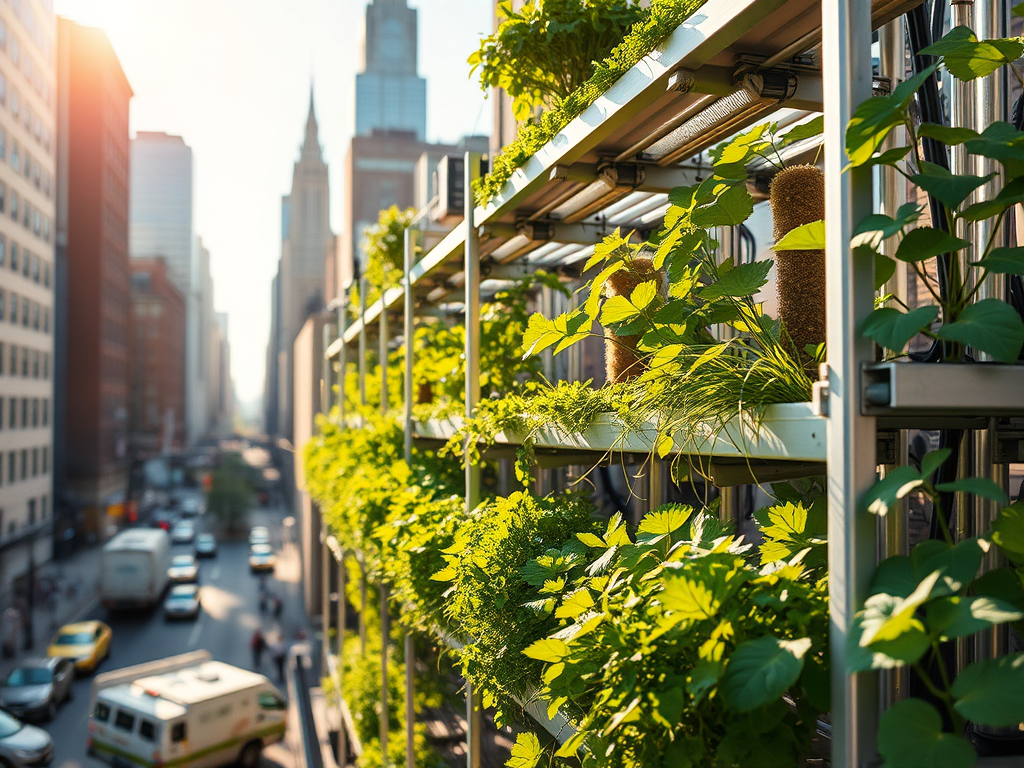
**Business Model:** Our company, GreenSprout Technologies, will specialize in providing eco-friendly urban farming solutions. We will offer modular, vertical farming systems that can be installed in urban environments, enabling residents and businesses to grow their own fresh produce year-round. These systems will use sustainable, space-efficient technology to minimize water usage and maximize yield.
#### 2. Target Market
Our primary target market includes urban residents, restaurants, and small businesses in New York City looking to grow fresh, sustainable produce. Additionally, we aim to appeal to eco-conscious consumers and commercial entities interested in reducing their carbon footprint and sourcing local produce.
#### 3. Direct Competitors
– **AeroFarms** – A leader in vertical farming, specializing in large-scale operations.
– **Plenty** – Known for its automated vertical farming systems.
– **Bowery Farming** – Another significant player, focusing on retail partnerships.
**Market Leader:** AeroFarms is currently the market leader due to its early entry and extensive operations.
#### 4. Competitive Advantages and Market Positioning
**Competitive Advantages:**
– **Innovative Design:** Our systems are more compact and modular, fitting better in urban settings.
– **Sustainability Focus:** We emphasize eco-friendly materials and energy-efficient operations.
– **Customer Support:** We offer hands-on installation and continuous support to ensure successful cultivation.
**Market Positioning:** We position ourselves as the most accessible and user-friendly option for urban farming, targeting not only large commercial operations but also individual households and small businesses.
#### 5. The 4Ps of Marketing
– **Product:** Modular vertical farming systems that are easy to install and maintain.
– **Price:** Competitive pricing with options for leasing to make it accessible to a broader audience.
– **Promotion:** Digital marketing, social media campaigns, and partnerships with local environmental groups.
– **Place/Distribution:** Direct sales through our website and retail partnerships with local home improvement and gardening stores.
#### 6. Employment Needs
– **Total Employees:** 20
– **Positions:**
– CEO
– Sales Manager
– Marketing Specialist
– 5 Sales Representatives
– 2 Installation Technicians
– 3 Customer Support Staff
– 2 R&D Engineers
– 5 Administrative and Operations Staff
#### 7. Risks and Problems
– **Market Adoption:** Urbanites may be slow to adopt new farming technologies.
– **Competition:** Facing established players in the market.
– **Regulatory Challenges:** Navigating urban zoning and environmental regulations.
#### 8. Customer Choice
Customers will choose our product due to its ease of use, sustainability, and the ability to grow fresh produce at home or in their business, thereby reducing their environmental impact and supporting local food production.
#### 9. Business Costs
– **Equipment:** $500,000
– **Shop Rent:** $60,000 per year
– **Staff Costs:** $1,200,000 per year
– **Utilities:** $30,000 per year
– **Marketing and Promotion:** $100,000 per year
– **Taxes:** $50,000 per year
– **Interest (if borrowed):** $20,000 per year
**Total Initial Investment:** $2,010,000
#### 10. Additional Funding Opportunities
– **Government Subsidies:** We can apply for agricultural technology grants, potentially securing up to $200,000.
– **Low-Interest Loans:** From green initiative funds, up to $300,000 at a reduced interest rate.
#### 11. Financial Projections
– **Estimated Return:** 20% annually
– **Capital Recovery Time:** 5 years
– **Post-Recovery Earnings:** $400,000 per year
#### 12. Market Research
We have conducted surveys and focus groups in New York City, which show a strong interest in sustainable urban solutions. 70% of respondents expressed interest in owning a home gardening system.
#### 13. SWOT Analysis
– **Strengths:** Innovative product, strong sustainability focus, customer support.
– **Weaknesses:** New to market, potential high initial investment.
– **Opportunities:** Growing urban populations, increasing environmental awareness.
– **Threats:** Competition from established players, regulatory challenges.
#### 14. Financial Statements
(For brevity, I’ll outline the format and key components rather than provide full financial statements.)
**Balance Sheet:** Assets, Liabilities, Equity projections over three years.
**Profit and Loss Statement:** Revenue, Cost of Sales, Gross Profit, Expenses, Net Profit over three years.
**Cash Flow Statement:** Cash from Operations, Investing, Financing over three years.
#### 15. Stages of Business Development
– **Stage 1:** Product development and testing.
– **Stage 2:** Funding and initial marketing.
– **Stage 3:** Launch and sales.
– **Stage 4:** Expansion and scaling up operations.
#### 16. Market News and Summary
Recent trends show a rising interest in sustainable and local food sources, with urban farming becoming increasingly popular in major cities like New York. Investing in GreenSprout Technologies offers a chance to tap into this growing market.
**Why Invest?**
– **Growth Potential:** The urban farming sector is expected to grow.
– **Impact:** Opportunity to invest in a business that contributes positively to the environment.
– **Profitability:** Strong projected returns with a clear path to market leadership.
**Risk Warning:** Investors must be aware that all investments carry risks, including the potential loss of capital. We invite you to evaluate this business plan carefully and consider the risks involved before making an investment decision.

Leave a Reply