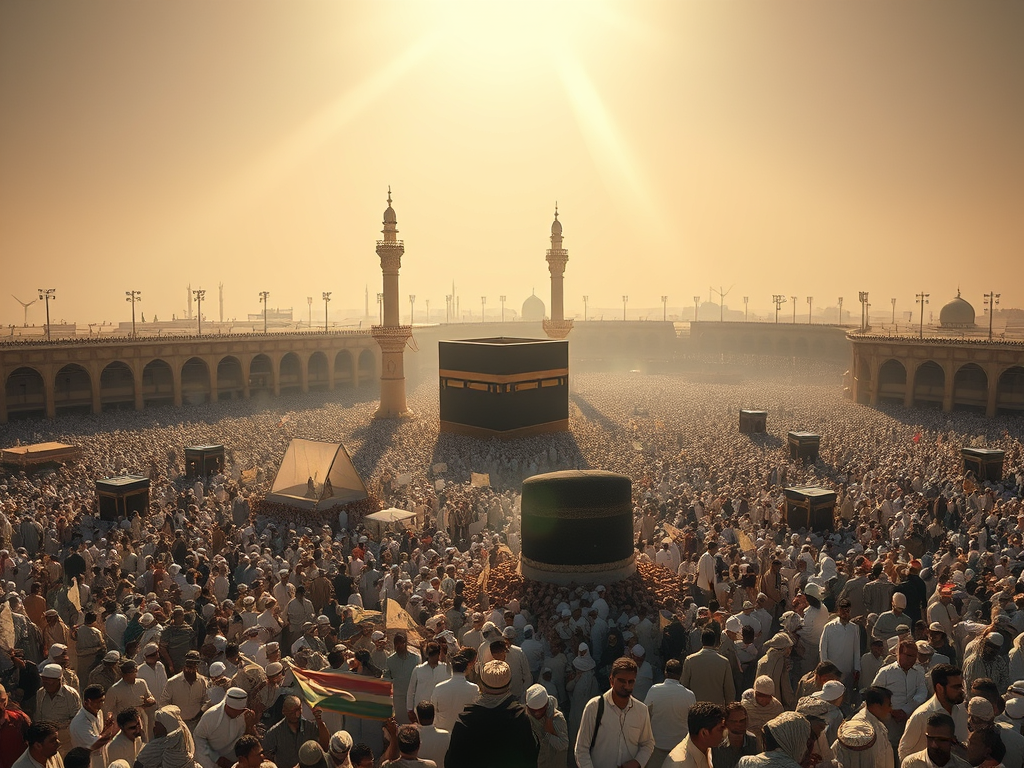
Let’s analyze the news of the “2024 Hajj disaster” where more than 1,300 people died due to extreme heat during the annual Hajj pilgrimage in Mecca, Saudi Arabia.
**Is this thing true and how likely is it to happen? If this thing is false, why would anyone release false news?**
This event is reported by multiple reliable sources, including the 2024 Year in Review by Britannica[3] and other news outlets, indicating it is likely true. The Hajj pilgrimage is a large and complex event, and given the extreme heat conditions in the region, such a disaster, although tragic, is plausible.
**Why do you think this happened?**
The Hajj disaster likely occurred due to a combination of factors including extreme weather conditions, overcrowding, and possibly inadequate infrastructure or emergency response measures. The Hajj is one of the largest annual gatherings in the world, and managing such a large crowd in a hot and arid environment is a significant challenge.
**Conspiracy theories analysis**
From a conspiracy theory perspective, one might speculate that the disaster could have been exacerbated or even orchestrated by various actors. However, there is no credible evidence to support such claims. The biggest beneficiary of such an incident, if it were to be manipulated, could theoretically be entities seeking to destabilize Saudi Arabia or disrupt Islamic pilgrimage events. However, this is highly speculative and lacks any concrete evidence.
**Process of the situation**
The process likely involved a series of events starting with the extreme heat wave affecting the region, followed by the large influx of pilgrims to Mecca. As the conditions worsened, the infrastructure and emergency services may have been overwhelmed, leading to a catastrophic outcome. The lack of adequate shade, water, and medical facilities could have contributed to the high number of casualties.
**Impact on the world or society**
The impact of such a disaster would be significant, both locally and globally. It would lead to widespread grief and outrage within the Muslim community and internationally. It could also lead to a reevaluation of safety protocols and emergency response plans for large gatherings. Politically, it might strain relations between Saudi Arabia and other countries, especially if there are allegations of negligence or inadequate preparation.
**Similar events in the past six hundred years**
Historically, the Hajj pilgrimage has been prone to various disasters, including stampedes, fires, and health crises. One notable example is the 1990 Hajj stampede, which resulted in the deaths of over 1,400 pilgrims. Another instance is the 2015 Mina stampede, which killed over 2,400 people. These events highlight the recurring risks associated with managing large crowds in challenging environments.
**How do people benefit from this or by making use of this?**
While the disaster itself does not provide a direct benefit, the aftermath could lead to improvements in safety measures, infrastructure, and emergency response protocols. This could benefit future pilgrims and enhance the overall safety and experience of the Hajj. Additionally, the incident might prompt increased investment in healthcare, emergency services, and infrastructure in the region.
**Impact on investment strategies**
Following such an incident, investors might be cautious about investing in sectors directly related to the Hajj or large public gatherings in Saudi Arabia until there are clear improvements in safety and emergency response measures. However, it could also create opportunities for investment in companies specializing in emergency response, healthcare, and infrastructure development. As an investor, one might consider investing in these sectors to capitalize on the anticipated improvements and increased spending in these areas.

Leave a Reply