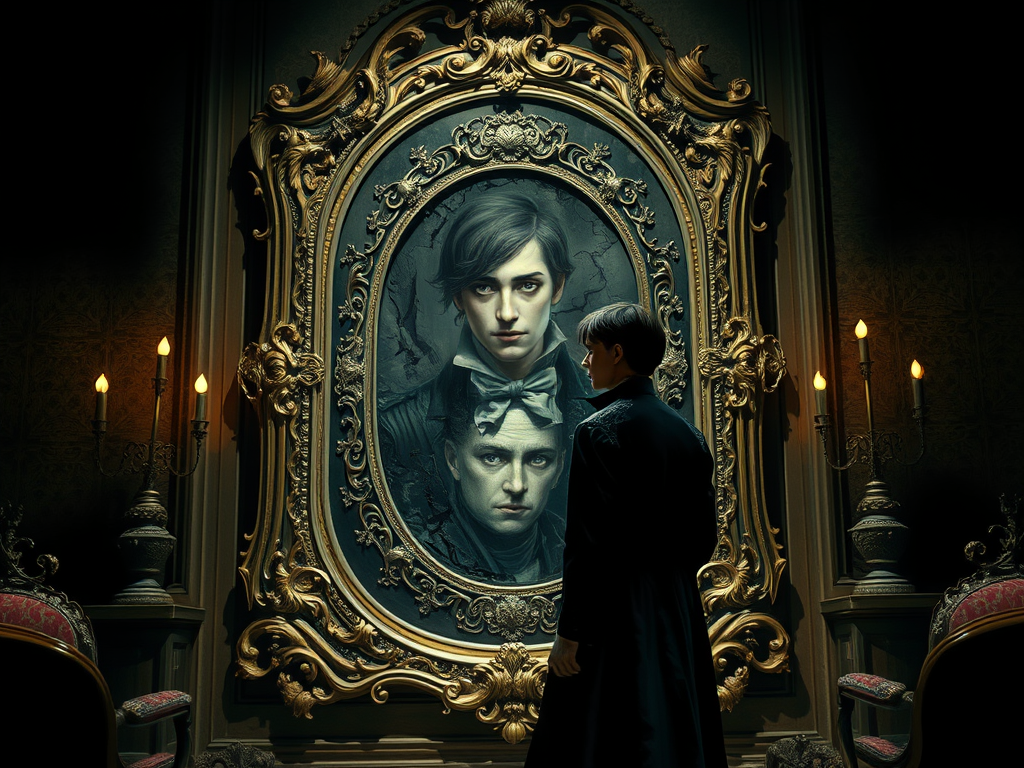
1. The name of this book:
The Picture of Dorian Gray
2. Author of this book:
Oscar Wilde
3. The type of book:
Novel, Gothic fiction, Philosophical fiction
4. The year this book was published:
1890
5. Introduction to this book:
The Picture of Dorian Gray is a philosophical novel by Oscar Wilde, first published complete in the July 1890 issue of Lippincott’s Monthly Magazine. The novel tells of a young man named Dorian Gray, the subject of a painting by artist Basil Hallward. Dorian is introduced to the pleasures of the world by his friend Lord Henry Wotton, leading him to make a wish that the painting would age instead of himself.
6. The central meaning of this book:
The central theme of the novel is the corruption and moral decay that result from the pursuit of pleasure and the desire for eternal youth and beauty. It explores the idea that one’s actions have consequences and that one cannot escape the impact of their choices.
7. Your opinion of this book includes characters (if any), point of view, plot of a play(if any), plot (if any):
The Picture of Dorian Gray is a captivating and thought-provoking novel. The characters are well-developed and complex, particularly Dorian Gray, who undergoes a significant transformation throughout the story. The point of view is primarily third-person omniscient, allowing the reader to gain insights into the thoughts and motivations of the main characters.
The plot follows Dorian Gray’s descent into immorality and the consequences of his Faustian bargain. As Dorian indulges in a hedonistic lifestyle, his portrait ages and reflects his corrupt soul, while he maintains his youthful appearance. The novel explores themes of art, beauty, and the nature of sin.
8. What is worth discussing about this book? What should I pay special attention to?
The book raises important questions about the nature of art and its relationship to morality. It’s worth discussing the role of the portrait in the story and what it symbolizes. Pay special attention to the philosophical debates between the characters, particularly Lord Henry’s hedonistic philosophy and its influence on Dorian.
9. How can the content of this book help people in their daily lives?
The Picture of Dorian Gray serves as a cautionary tale about the dangers of pursuing pleasure at the expense of one’s moral integrity. It encourages readers to reflect on their own values and the consequences of their actions. The novel also highlights the importance of taking responsibility for one’s choices and the impact they have on others.
10. What other readers thought of this book:
Readers have praised The Picture of Dorian Gray for its captivating storytelling, complex characters, and thought-provoking themes. Many have found the novel to be a profound exploration of human nature and the corrupting influence of society. However, some have criticized the book for its perceived moral ambiguity and the portrayal of certain characters.
11. What could be improved about this book?
Some readers might find the pacing of the novel to be uneven, with the first half focusing more on character development and philosophical discussions, while the latter half delves into the consequences of Dorian’s actions. Additionally, some might argue that certain female characters could have been more fully developed.
12. If you were asked to create a similar book, how would you write it and what would be different?
If I were to create a similar book, I would focus on a different art form, such as music or dance, as the central metaphor for the protagonist’s moral corruption. The setting could be updated to a contemporary urban environment, and the supporting characters could represent various aspects of modern society. The main difference would be the exploration of how technology and social media contribute to the protagonist’s downfall.
13. Are there any similar book recommendations?
If you enjoyed The Picture of Dorian Gray, you might also like:
– “The Strange Case of Dr Jekyll and Mr Hyde” by Robert Louis Stevenson
– “Frankenstein” by Mary Shelley
– “The Phantom of the Opera” by Gaston Leroux
– “The Portrait of a Lady” by Henry James
– “Oscar Wilde’s Other Works” such as “The Importance of Being Earnest” and “An Ideal Husband”

Leave a Reply