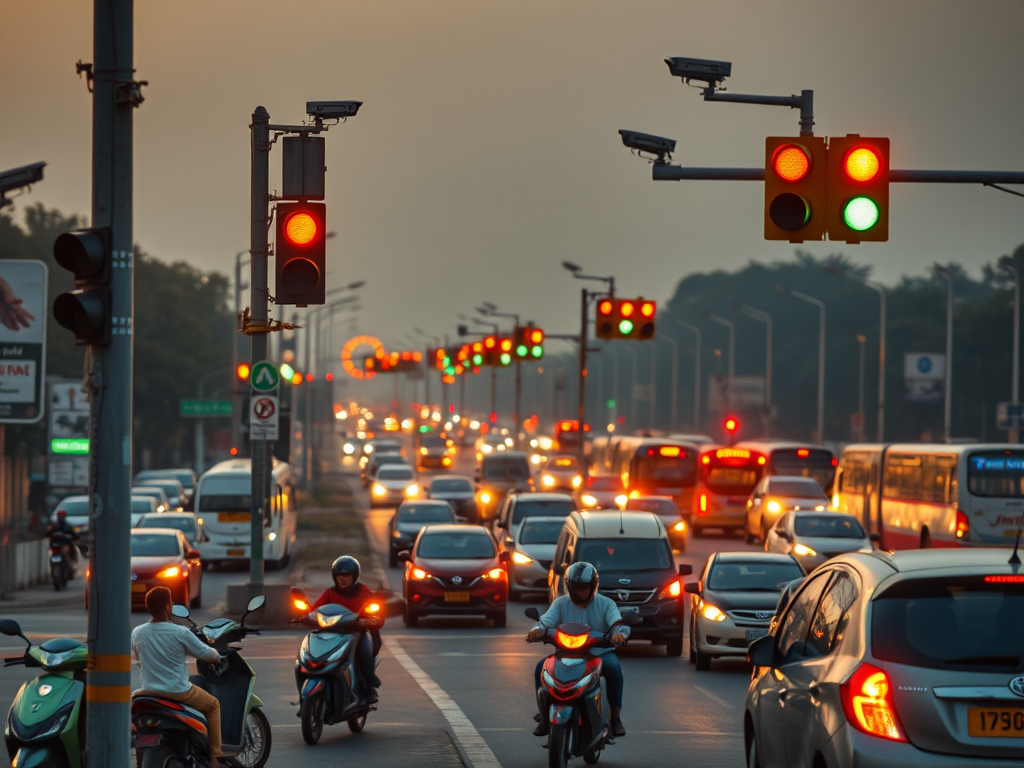
AI-managed traffic signals in Bengaluru, India
## Is this thing true and how likely is it to happen?
This news is true. The implementation of AI-managed traffic signals in Bengaluru, India, was reported in 2019, which indicates that the technology and infrastructure for such systems are already in place and have been operational for some time. The likelihood of such systems being adopted in other cities is high, given the benefits in traffic management and efficiency.
## Why do you think this happened?
This happened due to the need for more efficient traffic management in urban areas. Cities like Bengaluru face significant traffic congestion, and traditional traffic management systems often fail to optimize traffic flow effectively. AI technology, with its ability to analyze real-time data from cameras and adjust signal timings accordingly, offers a more dynamic and efficient solution.
## Conspiracy theories analysis
From a conspiracy theory perspective, one might argue that the biggest beneficiaries of this incident are the technology companies and government agencies involved in the development and implementation of these AI systems. These entities could potentially gain significant financial benefits and influence through the widespread adoption of such technologies. However, there is no substantial evidence to support the idea that this is a conspiracy rather than a genuine effort to improve urban infrastructure.
## Process of the situation
The process involved the deployment of cameras at traffic intersections to monitor traffic density in real-time. The data collected from these cameras is then analyzed by AI algorithms, which adjust the traffic signal timings to optimize traffic flow. This requires collaboration between local government, technology companies, and infrastructure providers to set up and maintain the system.
## Impact on the world or society
The impact of AI-managed traffic signals is significant. It can reduce traffic congestion, decrease travel times, and improve air quality by minimizing idling times for vehicles. This can lead to better quality of life for urban residents, reduced fuel consumption, and lower emissions.
## Similar events in the past six hundred years
While there have been no similar events involving AI in the past six hundred years, there have been historical efforts to manage traffic more efficiently. For example, the first traffic light was invented in the early 20th century by Garrett Morgan. However, these early systems were manual or based on fixed timings and did not have the real-time adaptive capabilities of modern AI systems.
## Benefits to people
People benefit from AI-managed traffic signals through reduced travel times, less congestion, and a more efficient use of urban infrastructure. This can also lead to economic benefits by reducing the time and resources spent on commuting.
## Impact on investment strategies
The adoption of AI in traffic management could influence investment strategies in several ways. Investors might focus on companies involved in AI development, urban infrastructure, and smart city technologies. Additionally, the success of such systems could lead to increased investment in other AI-driven urban solutions, such as smart energy grids and public transportation systems. As an investor, one might consider investing in technology firms specializing in AI, urban infrastructure development companies, and companies that provide data analytics services for urban planning.

Leave a Reply