### Business Plan for “AI-Powered Health Monitoring Drones”
#### 1. Business Overview
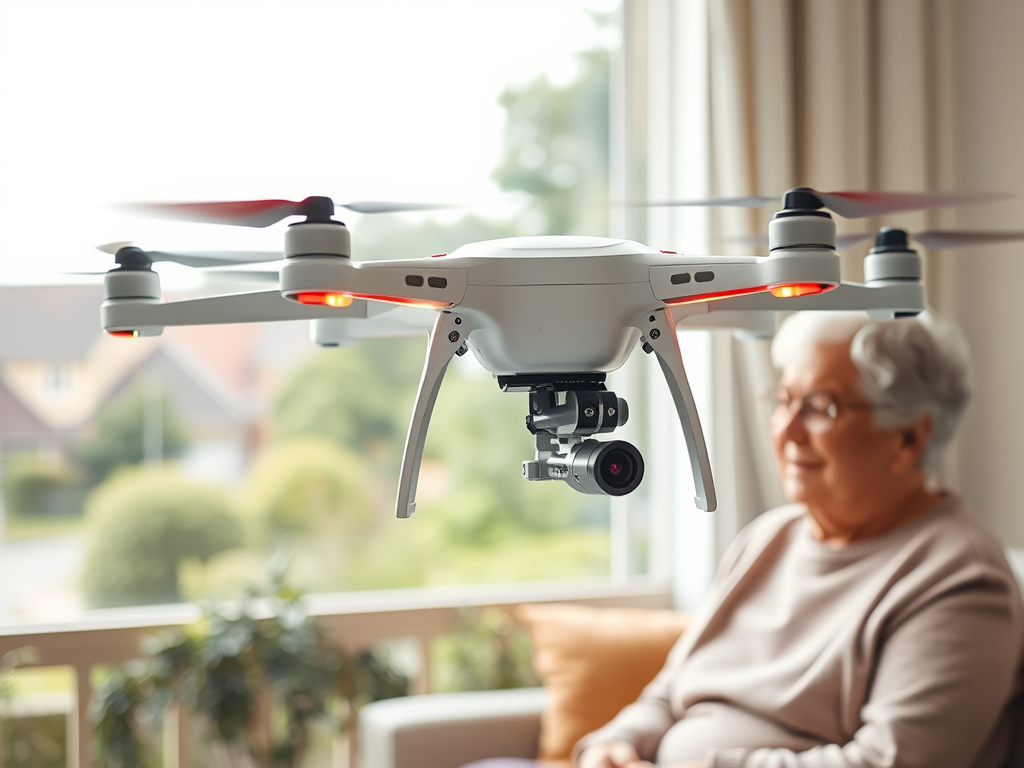
Our business, “AI-Powered Health Monitoring Drones,” operates in the biotechnology and drone technology industry. We are based in San Francisco, USA. The business utilizes drones equipped with advanced AI and sensors to provide continuous, non-invasive health monitoring services for elderly and chronically ill individuals at home.
#### 2. Target Market
The primary target market includes elderly individuals aged 65 and above, and people with chronic health conditions such as heart disease, diabetes, and respiratory issues. Secondary markets include healthcare providers and insurance companies looking to reduce costs and improve patient outcomes.
#### 3. Direct Competitors and Market Leader
Direct competitors include:
– BioIntelliSense, which offers remote patient monitoring solutions.
– TytoCare, providing at-home medical exams.
The market leader in remote health monitoring is currently BioIntelliSense, known for its comprehensive data analytics and integration with healthcare systems.
#### 4. Competitive Advantages and Market Positioning
Our competitive advantages include:
– Real-time AI analysis of health data directly from drones.
– Non-invasive, stress-free monitoring, enhancing user comfort.
– Scalability and ease of integration into existing health systems.
We position ourselves as a premium, innovative service focusing on comfort and advanced technology, targeting tech-savvy elderly and health-conscious individuals.
#### 5. The 4Ps
– **Product**: AI-equipped drones for health monitoring, subscription-based service.
– **Price**: $200 monthly subscription fee per user, with a one-time drone setup fee of $500.
– **Promotion**: Digital marketing, partnerships with healthcare providers, and social media campaigns targeting health and tech communities.
– **Place/Distribution**: Direct sales through our website and strategic partnerships with health clinics and retirement homes.
#### 6. Employment Needs
We plan to hire:
– 10 Drone Engineers
– 5 AI Specialists
– 5 Customer Support Staff
– 2 Marketing Professionals
– 1 CEO
Total: 23 employees
#### 7. Risks and Problems
– Regulatory changes concerning drone operations and data privacy.
– Technological failures or cybersecurity breaches affecting data security.
– Slower than anticipated market penetration due to reluctance to adopt new technology.
#### 8. Why Customers Will Choose Us
Customers will choose our service due to our seamless, high-tech solution that offers peace of mind by monitoring health from the comfort of home without invasive procedures.
#### 9. Business Costs
– Drones: $100,000 (initial purchase of 200 units)
– Office Space in San Francisco: $5,000/month
– Employee Salaries: $300,000/year
– Marketing: $100,000/year
– Utilities and Miscellaneous: $12,000/year
– Taxes and Insurance: $50,000/year
– Interest on Loans: $30,000/year (if needed)
Total Initial Cost: Approximately $1.5 million
#### 10. Additional Funding
We can apply for a technology development grant from the U.S. Department of Health and Human Services, potentially securing an additional $500,000. Additionally, low-interest loans from the Small Business Administration could support further expansion.
#### 11. Estimated Return and Recovery
Projected revenue in the first year: $2.4 million (assuming 1,000 subscribers).
Break-even point: 18 months.
Post-recovery, annual profit expected: $1 million.
#### 12. Market Research
We will conduct surveys among potential users from elderly care homes and chronic disease management groups to validate the demand and willingness to pay for our service. Additionally, we will use focus groups to refine our marketing strategy.
#### 13. SWOT Analysis
– **Strengths**: Innovative technology, strong market positioning, skilled team.
– **Weaknesses**: High initial costs, dependency on regulatory approval.
– **Opportunities**: Growing aging population, increasing demand for telehealth services.
– **Threats**: Rapid technological changes, competition from established companies.
#### 14. Stages of Business
– **Stage 1**: Product Development and Prototype Testing (0-6 months).
– **Stage 2**: Regulatory Compliance and Pilot Testing (6-12 months).
– **Stage 3**: Market Launch and Initial Customer Acquisition (12-18 months).
– **Stage 4**: Expansion and Scaling Operations (18-24 months).
#### 15. Market News and Summary
Recent market news highlights the increasing demand for telehealth solutions, driven by the aging population and the aftermath of the global health crisis. Our AI-powered health monitoring drones address this need directly, offering a revolutionary approach to healthcare that aligns with current trends.
**Why Invest?**
This business not only taps into a growing market but also leverages cutting-edge technology to disrupt traditional healthcare delivery. With solid returns projected and a clear path to scaling, “AI-Powered Health Monitoring Drones” represents a compelling investment opportunity.
**Investment Warning**: Please be aware that all business investments carry risks, including the potential loss of the entire investment. It is crucial to consider these risks carefully and consult with a financial advisor before making any investment decisions.

Leave a Reply