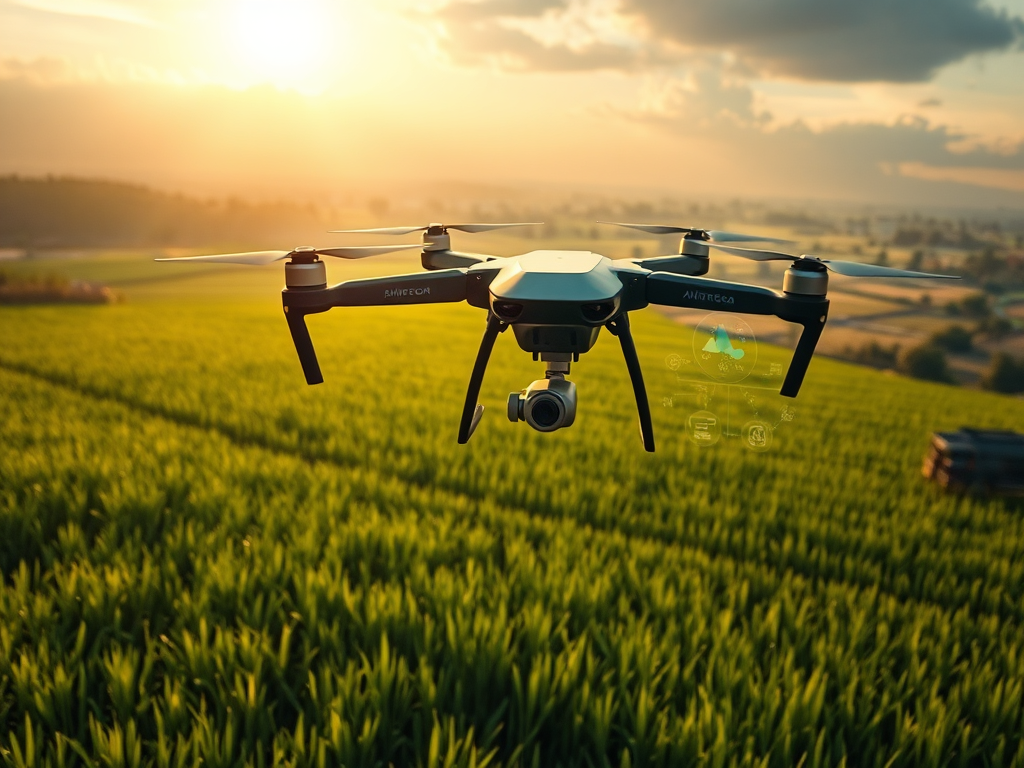
### Business Plan: AI-Driven Agricultural Drone Services in Thailand
—
#### 1. Business Overview
**Industry:** AgTech (Agricultural Technology)
**Business Model:** We operate a service that utilizes AI-enhanced drones for precision agriculture, offering farmers detailed data analysis for crop monitoring, soil health, and pest management.
**Location:** The business will be based in Chiang Mai, Thailand, a hub for agricultural innovation in Southeast Asia.
—
#### 2. Target Market
Our primary target market includes small to medium-sized farming operations in Thailand. Additionally, we will target large agricultural conglomerates and governmental agriculture departments that seek to modernize and optimize their farming practices.
—
#### 3. Direct Competitors and Market Leader
– **Direct Competitors:** DJI Agriculture, Parrot, and AgEagle Aerial Systems.
– **Market Leader:** DJI Agriculture currently holds the largest market share in the global agricultural drone market, and similarly has a strong presence in Thailand.
—
#### 4. Competitive Advantages and Market Positioning
**Competitive Advantages:**
– Customized AI algorithms tailored to the diverse agricultural needs of Thailand.
– Partnerships with local agricultural universities for continuous R&D.
– Comprehensive service packages that include drone services and data analytics.
**Market Positioning:** We position ourselves as a premium, high-tech service provider dedicated to sustainable and efficient farming practices, differentiating from competitors by focusing on local adaptation and continuous innovation.
—
#### 5. The 4Ps
– **Product/Service:** AI-driven drone services for agricultural needs, including data analytics and farming recommendations.
– **Price:** Competitive pricing based on service packages, with discounts for long-term contracts.
– **Promotion:** Digital marketing via social media and agricultural forums, participation in local and international AgTech conferences.
– **Place/Distribution:** Direct service to farms across Thailand, with a central hub in Chiang Mai and satellite offices in key agricultural regions.
—
#### 6. Hiring Needs
– We plan to hire 20 employees initially.
– Job positions include Drone Operators (10), Data Analysts (5), Sales and Marketing Specialists (3), and Administrative Staff (2).
—
#### 7. Risks and Problems
– Technological failures or data breaches could compromise service reliability and client trust.
– Regulatory changes in drone usage or data privacy could impact operations.
– Potential resistance from traditional farmers to adopt new technology.
—
#### 8. Customer Choice Motivation
Customers will choose our service due to our proven track record of increasing crop yields and reducing operational costs through precise data-driven insights. Our localized approach ensures solutions are tailored specifically to the conditions and crops of Thailand.
—
#### 9. Business Costs
– **Equipment:** $500,000 for drones and AI hardware.
– **Shop Rent:** $24,000 annually.
– **Staff Costs:** $300,000 annually.
– **Utilities (Electricity, Water):** $12,000 annually.
– **Taxes:** $50,000 annually.
– **Interest (Loan):** $20,000 annually.
– **Total Initial Cost:** $886,000.
—
#### 10. Additional Funding
We are eligible for the Thai government’s agricultural innovation subsidy, which provides up to $100,000 for tech startups in agriculture. Additionally, low-interest loans from the Bank of Thailand for green technology startups could provide an additional $200,000.
—
#### 11. Estimated Return and Break-even
– **Estimated Annual Revenue Post-Break-even:** $1.5 million.
– **Time to Recover Capital:** 2 years.
– **Annual Earnings Post-Recovery:** $600,000.
—
#### 12. Market Research
We will conduct surveys among potential clients in the Chiang Mai area and analyze data from pilot projects. We will also monitor the performance of similar services globally to benchmark our success and adjust strategies accordingly.
—
#### 13. SWOT Analysis
– **Strengths:** Cutting-edge technology, strong local partnerships, experienced team.
– **Weaknesses:** Initial high costs, potential technological dependency.
– **Opportunities:** Growing market demand for precision agriculture, government support for AgTech.
– **Threats:** Rapid technological changes, competition from established drone manufacturers.
—
#### 14. Stages of Business Development
– **Stage 1 (0-6 months):** Establish the business, procure equipment, hire initial staff.
– **Stage 2 (6-12 months):** Launch services, start pilot projects, begin marketing campaigns.
– **Stage 3 (1-2 years):** Expand services nationwide, refine AI algorithms, and increase market penetration.
– **Stage 4 (2+ years):** Aim for international expansion, explore new tech integrations.
—
#### 15. Market News and Summary
**Recent Market News:** The Thai Ministry of Agriculture has recently launched a program to subsidize drone technology in farming, indicating strong governmental support for our business model.
**Summary:** By investing in our AI-driven agricultural drone service, you are not only tapping into a rapidly growing market but also contributing to sustainable agriculture in Thailand. Our innovative approach, local partnerships, and governmental backing position us for significant growth and success.
**Investment Warning:** Investing in business ventures carries the risk of losing money. Please consider this carefully before making your decision.
—
This comprehensive business plan outlines a promising opportunity in the AgTech sector within Thailand. We invite you to join us in revolutionizing agriculture with cutting-edge technology.

Leave a Reply