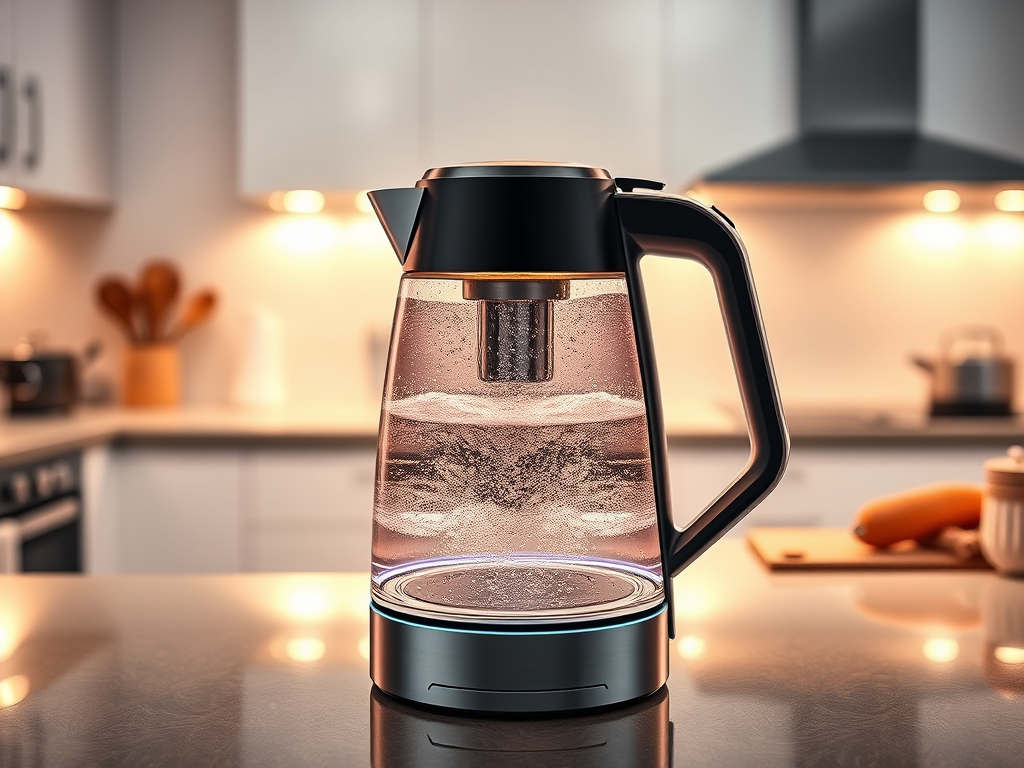
Electric Kettle
**1. The function of the product:**
An electric kettle is a kitchen appliance used for boiling water. It is convenient for quickly heating water for tea, coffee, cooking, or other hot beverages.
**2. The production process of this product from raw material to finished products:**
**Raw Materials:**
– Stainless steel or plastic for the body
– Copper or aluminum for the heating element
– Silicone for gaskets and seals
– Glass for the viewing window
– Electrical components (wires, thermostat, power cord)
– Paint or coating for external finish
**Production Steps:**
1. **Material Preparation:** Raw materials are inspected and prepared for manufacturing.
2. **Molding:** Plastic or metal parts are molded using injection molding or stamping.
3. **Heating Element Construction:** Copper or aluminum is shaped and coated to form the heating element.
4. **Assembly:** The body, heating element, and other components are assembled.
5. **Electrical Wiring:** Electrical components are wired and connected to the heating element and controls.
6. **Quality Control:** The assembled kettle is tested for safety and functionality.
7. **Painting/Coating:** The external finish is applied.
8. **Final Assembly:** Additional components like the lid, handle, and power cord are attached.
9. **Packaging:** The finished product is packaged for distribution.
**3. The cost of the production of the product:**
**Currency Unit:** USD
**Costs:**
– **Raw Materials:** $15
– **Machinery:** $5
– **Labor Cost:** $10 (Assembly line workers, quality control inspectors, electricians)
– **Distribution Cost:** $5
**Total Production Cost:** $35
**4. How long does it take for this product to be produced?**
Approximately 3-5 days from start to finish, including all stages of production and quality control.
**5. List three famous companies that manufacture this product:**
– Breville
– Hamilton Beach
– Cuisinart
**6. Which countries produce this product usually? Please list three countries.**
– China
– United States
– Germany
**7. New Design for the Electric Kettle:**
**New Design Features:**
– **Smart Control:** Equipped with Bluetooth connectivity, allowing users to control the kettle via a smartphone app. Features include setting temperature, scheduling boil times, and remote operation.
– **Temperature Customization:** Users can select specific water temperatures for different types of tea or coffee, ranging from 40°C to 100°C.
– **Energy Efficiency:** The kettle uses an advanced heating element with a new insulation technology that reduces energy consumption by 20%.
– **Aesthetic Design:** A sleek, modern design with customizable LED lighting on the base to match any kitchen decor. Materials include a durable, heat-resistant glass body with a stainless steel base.
– **Safety Features:** Enhanced auto-shutoff mechanism and a child-lock feature to prevent accidental boiling.
– **Capacity and Portability:** A compact design with a 1.5-liter capacity, suitable for personal and small family use, yet lightweight and portable.
**8. Why customers or clients would like to buy the new design instead of the original one:**
Customers would prefer the new design for several reasons:
– **Convenience:** The smart control feature offers unparalleled ease of use and flexibility.
– **Customization:** Precise temperature control enhances the taste of beverages like tea and coffee.
– **Energy Saving:** Lower energy consumption appeals to environmentally conscious consumers.
– **Aesthetics and Functionality:** The modern design and additional safety features meet both the functional and aesthetic needs of users.
**9. Total cost of the new design:**
**Currency Unit:** USD
**Costs:**
– **Raw Materials:** $20 (Due to advanced materials like heat-resistant glass and energy-efficient insulation)
– **Machinery:** $7 (Additional equipment for smart features)
– **Labor Cost:** $12 (Requires skilled labor for smart technology integration, software developers, and electricians)
– **Distribution Cost:** $6 (Due to potentially higher demand and specialized packaging)
**Total Production Cost:** $45
**Production Steps:**
1. **Material Preparation:** Advanced materials are inspected and prepared.
2. **Molding:** Glass and stainless steel parts are molded or formed.
3. **Heating Element Construction:** Energy-efficient heating element is crafted.
4. **Smart Technology Integration:** Assembly of smart control and temperature sensors.
5. **Assembly:** Components are assembled with precision.
6. **Electrical Wiring:** Wiring for both traditional and smart features.
7. **Quality Control:** Rigorous testing for safety, functionality, and smart features.
8. **Painting/Coating:** Application of durable finishes.
9. **Final Assembly:** Attaching all parts including smart components.
10. **Packaging:** Specialized packaging for the high-end product.
**10. Revenue forecast for the new design compared with the original one:**
**Original Design Revenue:**
– **Selling Price:** $50
– **Projected Units Sold Annually:** 100,000
– **Total Revenue:** $5,000,000
**New Design Revenue:**
– **Selling Price:** $80 (Reflecting added features and technology)
– **Projected Units Sold Annually:** 75,000 (Due to higher price point but increased demand due to features)
– **Total Revenue:** $6,000,000
The new design is forecasted to generate higher revenue despite lower projected sales volume, due to the increased price point and the added value of advanced features.

Leave a Reply