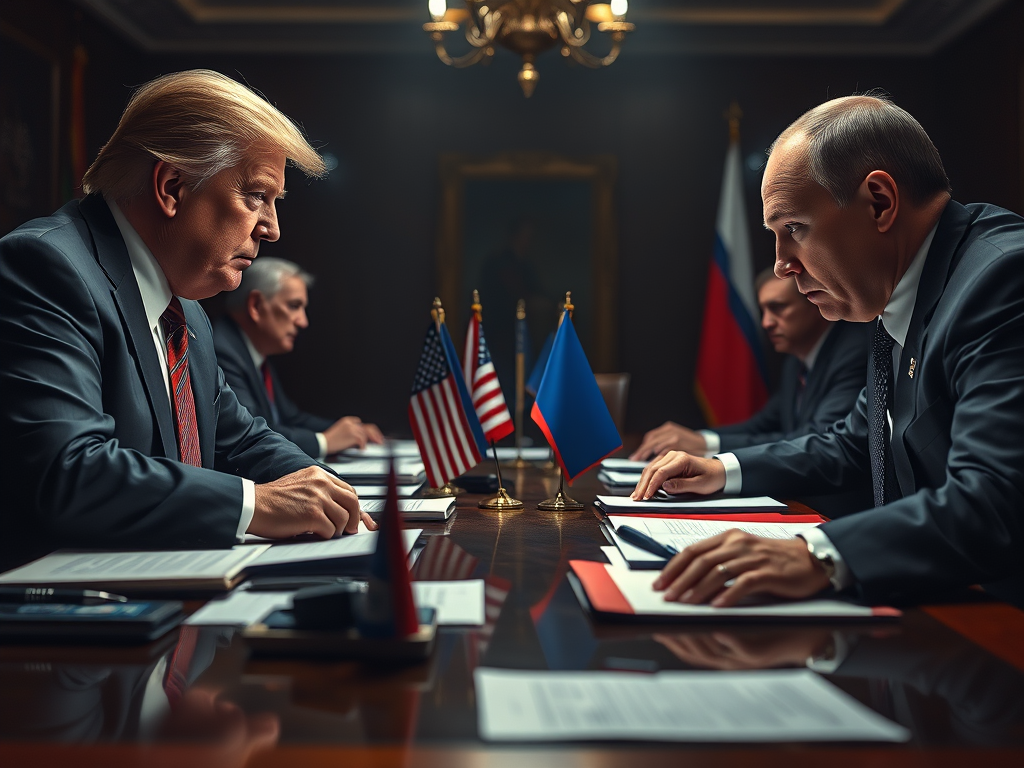
Analysis of the News: US-Led Peace Talks Hampered by Trump’s Reluctance to Pressure Putin
**Is this thing true and how likely is it to happen?**
This news appears to be true based on the sources from the Atlantic Council, which is a reputable think tank. The likelihood of it happening is high, given the consistent reporting of similar dynamics in US-Russia relations and the ongoing conflict in Ukraine.
**Why do you think this happened?**
This situation has arisen due to the differing approaches of the US and Russia towards the conflict in Ukraine. Trump’s administration has been criticized for its reluctance to pressure Putin, while Russia has taken a hardline stance, seeking significant concessions from Ukraine. This disparity in negotiation strategies has stalled the peace talks.
**Conspiracy Theories and Beneficiaries**
From a conspiracy theory perspective, one could argue that Putin is the biggest beneficiary of this situation. By maintaining a hardline stance and continuing military actions, Putin may be trying to exploit Trump’s willingness to offer concessions to achieve Russia’s long-term goals in Ukraine. The Russian government and its allies would be the primary beneficiaries if they succeed in gaining control over the disputed Ukrainian provinces and reducing Western support for Ukraine.
Organizations capable of orchestrating such a scenario include the Russian government and its military apparatus, as well as any entities with significant influence over Trump’s foreign policy decisions.
**Process of the Situation**
The process involves ongoing diplomatic efforts by the US to broker a peace deal between Russia and Ukraine. However, Russia’s refusal to reciprocate with meaningful concessions and its continued military aggression have hindered these efforts. Putin’s public statements and actions, such as questioning Zelenskyy’s legitimacy and proposing a UN administration for Ukraine, have further complicated the negotiations.
**Impact on the World or Society**
This incident will likely exacerbate the conflict in Ukraine, leading to more suffering for the Ukrainian people and potentially destabilizing the region. It could also strain relations between the US and its European allies, who may view Trump’s approach as too soft on Russia. Globally, it may undermine trust in US leadership in international conflicts and negotiations.
**Similar Events in the Past**
Similar events have occurred throughout history, such as the Munich Agreement in 1938, where Britain and France appeased Nazi Germany by allowing it to annex parts of Czechoslovakia. This appeasement policy ultimately failed to prevent World War II. The process involved diplomatic negotiations where the Western powers sought to avoid conflict by giving in to some of Germany’s demands, but this only emboldened Hitler’s aggressive expansion.
The impact was catastrophic, as it did not prevent the war and led to significant territorial losses and human suffering. The lesson from history is that appeasement policies can sometimes embolden aggressors rather than deter them.
**Benefits and Utilization**
People may benefit from this situation by understanding the geopolitical dynamics at play and adjusting their investment strategies accordingly. For instance, investors might avoid investments in Ukraine or other regions affected by the conflict. They could also look into defense or security-related industries that might see increased demand due to the ongoing tensions.
**Impact on Investment Strategies**
This incident would likely lead investors to be cautious about investments in Eastern Europe, particularly in Ukraine. It could also increase interest in defense and security sectors, as well as in countries or industries that are less likely to be affected by the conflict.
As an investor, one might consider diversifying portfolios to include more stable regions and sectors, such as technology, energy, or healthcare, which are less directly impacted by geopolitical conflicts. Additionally, investments in countries with strong diplomatic relations and stable political environments could be more attractive.

Leave a Reply