Introduction
The Israeli-Palestinian conflict remains one of the world’s most intractable disputes, with efforts to achieve a peace agreement or a two-state solution facing significant hurdles. This conflict involves deep-seated religious, historical, and security issues, compounded by geopolitical and economic factors. Below, we explore why reaching a resolution has been elusive, offering a clear overview for understanding this complex situation.
Religious and Cultural Barriers
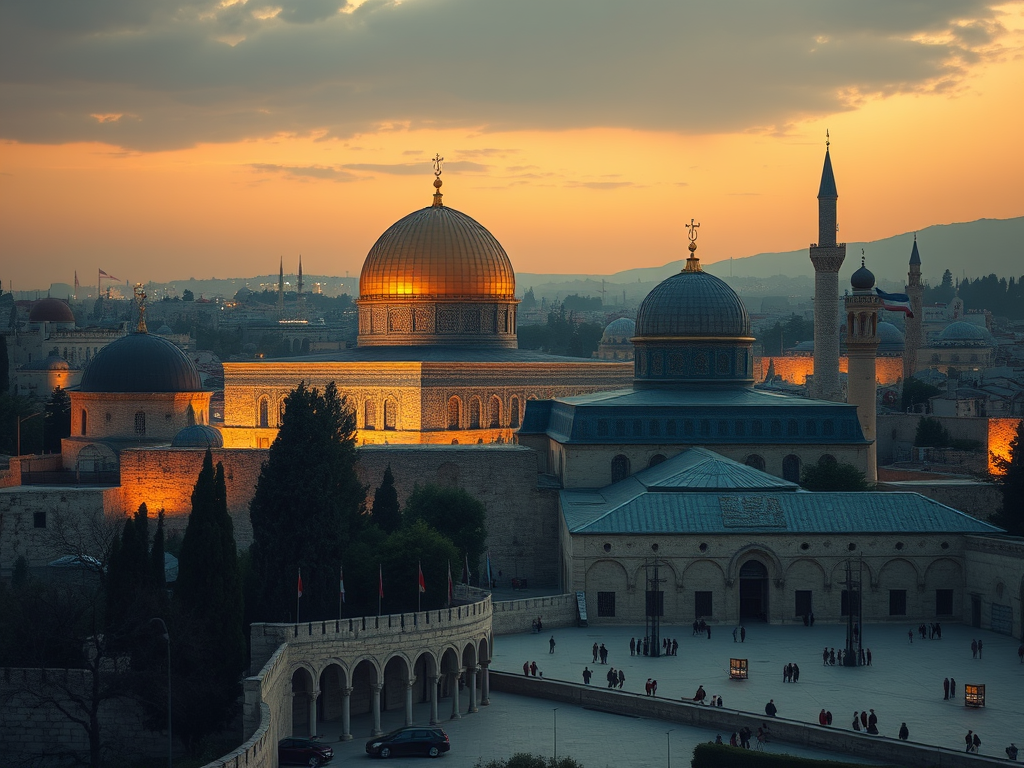
Jerusalem is central to both Judaism and Islam, creating a major obstacle. For Jews, it’s the site of the ancient Temple Mount, while for Muslims, it hosts the Al-Aqsa Mosque and Dome of the Rock, the third holiest site in Islam

. This shared but conflicting claim makes dividing the city nearly impossible, as both sides see it as their eternal capital. Additionally, mutual rejection of each other’s religious legitimacy, with some extremists viewing the other as morally illegitimate, fuels hostility and complicates negotiations.
Historical Grievances
The conflict’s history, particularly Israel’s establishment in 1948 and the subsequent displacement of Palestinians (known as the Nakba), shapes both sides’ identities. Israelis see their state as a necessary refuge after centuries of persecution, including the Holocaust, while Palestinians demand recognition of their historical rights, including the right of return for refugees

. These competing narratives, unresolved in past talks like the Oslo Accords, deepen mistrust and make compromise difficult.
Security Challenges
Israel’s need for security, given its small size and surrounding hostile groups like Hamas and Hezbollah, clashes with Palestinian statehood aspirations. Israel maintains control over key areas, such as the West Bank and Gaza, often seen by Palestinians as oppressive, with Gaza described as an “open-air prison”
. The cycle of violence, including the October 7, 2023, Hamas attack, reinforces Israel’s security measures, making trust for peace talks harder to build.
Geopolitical Influences
Major powers play a significant role. The U.S., a strong Israel supporter, has pushed for a two-state solution but actions like recognizing Jerusalem as Israel’s capital under Trump have complicated matters

. Russia and China benefit from U.S. distraction, while Iran, backing groups like Hamas, opposes Israel, adding regional tension. This international dynamic makes a localized peace deal challenging.
Neighboring Countries’ Roles
Countries like Turkey, under Erdoğan, support Palestine and criticize Israel, potentially benefiting from regional instability

. Turkey’s historical ties and mediation efforts, like with Hamas, show its complex role, while Arab states like Saudi Arabia’s 2002 Peace Initiative, rejected by Israel, highlight regional divisions

.
Economic Interests
Prolonged conflict benefits certain industries, such as arms dealers profiting from military hardware demand. Human trafficking and drug trafficking may exploit chaos, while post-war reconstruction offers opportunities for financial institutions

. The Palestinian economy, with a 35% GDP decline in 2024, faces severe challenges, while Israel incurs security costs, yet both sides see economic stakes in maintaining the status quo

.
Survey Note: Detailed Analysis of Barriers to Peace
The Israeli-Palestinian conflict, ongoing for decades, has defied numerous peace initiatives, including the internationally recognized two-state solution. This survey note provides a comprehensive examination of the factors preventing a peace agreement, drawing on recent analyses and historical context, with a focus on religious, historical, security, geopolitical, regional, and economic dimensions. The analysis is informed by a range of sources, ensuring a thorough understanding of this complex issue as of May 27, 2025.
Religious and Cultural Dimensions
The religious and cultural divide is a fundamental barrier, centered on Jerusalem, claimed by both Jews and Muslims as their holiest city. For Jews, Jerusalem is the site of the ancient Temple Mount, a symbol of historical and spiritual significance, while for Muslims, it hosts the Al-Aqsa Mosque and Dome of the Rock, the third holiest site in Islam

. This dual claim complicates any division, as both sides view it as their eternal capital, a point highlighted in failed negotiations like the Camp David Summit in 2000.
Beyond territorial claims, mutual religious rejection exacerbates tensions. Extremists on both sides often frame the other as illegitimate, with some Jewish hardliners viewing Palestinians as descendants of biblical enemies and some Muslim extremists labeling Jews as “occupiers” or “enemies of God.” This ideological divide, not directly addressed in recent peace talks, fuels hostility and makes compromise politically and socially risky for leaders.
Historical Context and Grievances
The historical narrative is a cornerstone of the conflict, with Israel’s establishment in 1948 marking a pivotal moment. For Israelis, this was a legitimate act of self-determination, especially post-Holocaust, but for Palestinians, it was the “Nakba” (catastrophe), displacing hundreds of thousands and creating a refugee crisis that persists

. The Oslo Accords (1993–1995) attempted to address these issues by dividing Palestinian territories into administrative zones, but the refugee right of return, as per UN Resolution 194, remains unresolved, deepening mistrust.
Past peace efforts, such as the Annapolis Conference in 2007, failed partly due to these historical grievances. Olmert’s offer, reportedly giving Palestinians 100% of disputed lands, was not accepted, reflecting the difficulty of reconciling competing historical claims

. The Second Intifada (2000–2005), sparked by Ariel Sharon’s visit to the Temple Mount, further eroded trust, convincing many Israelis of negotiation futility and Palestinians of resistance necessity.
Security Concerns and Their Implications
Security is a paramount concern, particularly for Israel, given its small size and perceived threats from surrounding Arab and Muslim states and groups like Hamas, Hezbollah, and Iran-backed militias. Israel’s need for “absolute security” includes maintaining control over the West Bank and Gaza, often seen by Palestinians as oppressive. Gaza, under blockade since 2007, is described as an “open-air prison,” with frequent military incursions and a 40% unemployment rate

.
The October 7, 2023, Hamas attack, killing over 1,400 and taking hundreds hostage, reinforced Israel’s security measures, including settlements and checkpoints, which Palestinians view as dehumanizing. This cycle of violence, with groups like Hezbollah and the Houthis adding regional tension, makes building mutual trust for peace talks nearly impossible. A Just Security article from August 2023 suggests involving more parties to address security, but this adds complexity

.
Geopolitical Interests and International Dynamics
The conflict is deeply influenced by major powers. The U.S., Israel’s closest ally, has traditionally supported a two-state solution, but actions like Trump’s 2017 Jerusalem recognition and Golan Heights acknowledgment have shifted the balance, limiting prospects

. The Biden administration, as of 2025, has reiterated support but not fully reversed these changes, maintaining a delicate balance.
Russia, focused on Ukraine, benefits from U.S. Middle East distraction, reducing European pressure, while China, expanding in Asia, also gains from U.S. focus elsewhere

. Iran, backing Hamas, Hezbollah, and Houthis, opposes Israel, creating a regional rivalry that complicates peace. A Reuters article from May 2024 notes the Gaza war’s renewed focus on a two-state solution, but U.S. isolation diplomatically limits progress

.
Role of Neighboring Countries
Neighboring countries, particularly Turkey, play a significant role. Under Erdoğan, Turkey supports Palestine, recognized in 1988, and provides aid to Hamas in Gaza, positioning itself as a mediator

. An Al Jazeera article from October 2023 highlights Turkey’s mediation efforts, like hostage release talks, but also notes its criticism of Israel, potentially benefiting from instability

. Turkey’s support for HTS in Syria and desire to expand Middle East influence suggest it may prefer conflict continuation.
Other Arab states, like Saudi Arabia, proposed the 2002 Arab Peace Initiative, offering normalization for a Palestinian state based on pre-1967 borders, but Israel’s refusal, citing security, shows regional divisions

. Egypt, sharing a Gaza border, mediates but prioritizes stability, limiting its role in pushing for peace.
Economic Interests and Conflict Perpetuation
Economic factors also hinder peace. Prolonged conflict benefits arms dealers, with demand for military hardware high, and potentially human trafficking and drug trafficking organizations exploiting chaos, though specific links are less documented. Post-war reconstruction, as seen in other conflicts, offers opportunities for financial institutions, with a World Bank report from September 2024 noting Gaza’s economic freefall, a 35% GDP decline, and critical cash shortages

.
Israel faces security-related costs, estimated in a 2015 RAND study, but also seeks economic cooperation, like with Egypt and Saudi Arabia for Suez Canal development

. Global trade disruptions, like Houthi attacks on Red Sea shipping, raise costs, showing economic stakes in maintaining the status quo

.
Comparative Analysis: Key Barriers
To summarize, the following table outlines the main barriers and their impacts:
| Barrier | Description | Impact on Peace |
|---|---|---|
| Religious/Cultural Divide | Jerusalem’s dual holy status, mutual religious rejection | Makes territorial division politically risky |
| Historical Grievances | Nakba, refugee crisis, competing narratives | Fuels mistrust, complicates compromise |
| Security Concerns | Israel’s need for security vs. Palestinian statehood, cycle of violence | Erodes trust, reinforces military measures |
| Geopolitical Interests | U.S. support, Iran opposition, Russia/China distraction | Adds international complexity, delays talks |
| Neighboring Countries | Turkey’s mediation, Arab states’ initiatives, potential benefit from instability | Divides regional support, prolongs conflict |
| Economic Interests | Arms sales, trafficking, reconstruction opportunities | Incentives for conflict continuation |
Conclusion
As of May 27, 2025, the Israeli-Palestinian conflict’s resolution remains elusive due to intertwined religious, historical, security, geopolitical, regional, and economic factors. While the two-state solution is the recognized framework, alternative proposals like confederated models face similar challenges. Addressing root causes—mutual recognition, security guarantees, and shared economic benefits—will be crucial, but current dynamics suggest short-term peace agreements are unlikely.
Key Citations
- Two-state solution Wikipedia page
- Council on Foreign Relations U.S. policy on conflict
- Israeli–Palestinian peace process Wikipedia
- NPR article on two-state solution possibility
- Reuters article on two-state solution
- Brookings article on Turkey’s Gaza response
- Turkish Ministry foreign relations with Palestine
- Israel–Turkey relations Wikipedia page
- Atlantic Council Egypt Turkey peace negotiations
- War on the Rocks Turkey’s Gaza war response
- The Conversation economic forces in conflict
- World Bank report on Palestinian economy impact
- RAND Corporation costs of Israeli-Palestinian conflict
- Brookings economic repercussions of Israel-Gaza war
- If Americans Knew economic impact statistics
- AJC Israel’s enduring quest for peace article
- Vox article on two-state solution advocacy
- Just Security two-state solution enlargement
- Al Jazeera Turkey’s mediation potential article

Leave a Reply