Introduction
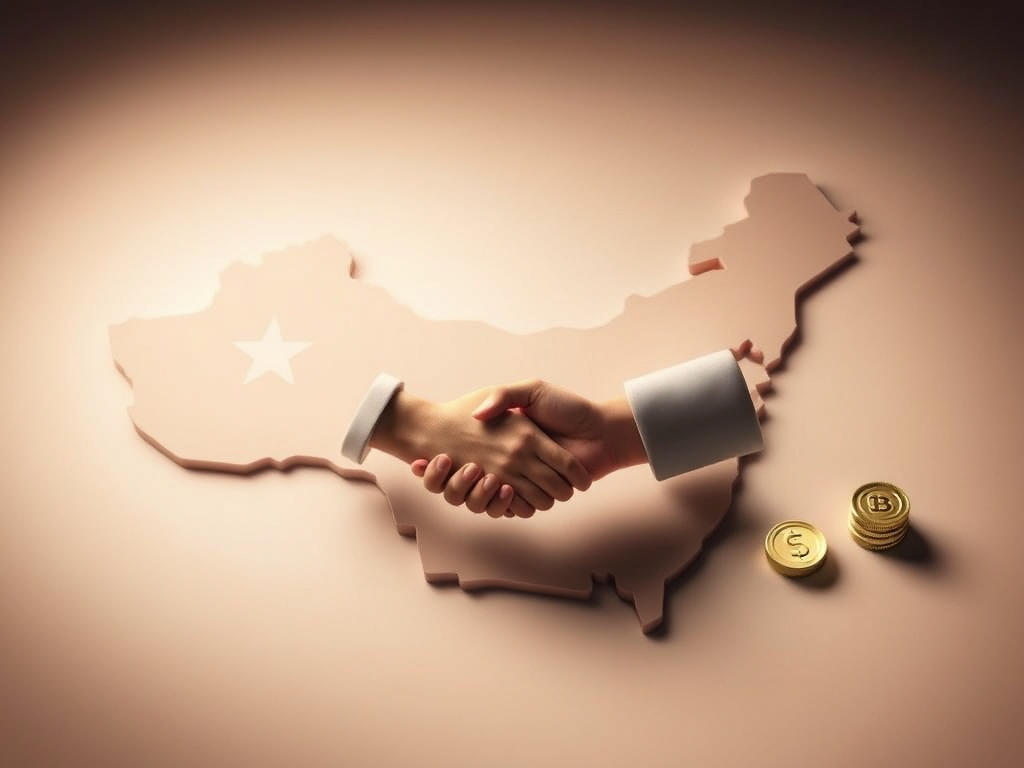
China’s potential military action against Taiwan is a complex and debated topic, influenced by strategic, economic, and social factors. While tensions exist, several reasons suggest China does not need, will not, and cannot attack Taiwan, making peaceful approaches more likely. This response explores these dimensions in a clear, approachable way for a general audience, acknowledging the uncertainty and complexity involved.
Why China Does Not Need to Attack Taiwan
China’s economic interdependence with Taiwan and neighboring countries reduces the need for military action. Taiwan exported around $95.7 billion worth of goods to China in 2023

, highlighting deep trade ties that could naturally align Taiwan closer to China over time. Additionally, China’s trade with Japan, South Korea, and others makes these nations hesitant to oppose China over Taiwan, as it could harm their economies. Social ties, like the 362,724 mainland Chinese spouses in Taiwan as of March 2025

, further foster peace, reducing the need for conflict.
Why China Will Not Attack Taiwan
China seems likely to prioritize non-military strategies, aligning with Sun Tzu’s Art of War principle of winning without fighting

. The focus is shifting toward AI and military technology, where leadership could secure global dominance without needing to invade Taiwan. Global conflicts, like the Russia-Ukraine war, benefit China by offering discounted resources, such as natural gas

, allowing it to strengthen economically while avoiding costly wars.
Why China Cannot Attack Taiwan
Attacking Taiwan poses significant challenges. China is surrounded by potential adversaries like Japan and India, and a prolonged conflict could provoke actions, such as increased military presence in the South China Sea

. Oil reserves, officially at 90 days, could deplete quickly if supply routes are blocked, echoing historical failures like Germany’s in WWII

. Post-conflict, occupying Taiwan—a democratic society with a distinct identity—would likely face resistance, protests, and high stabilization costs, straining China’s international relations

.
Survey Note: Comprehensive Analysis of China’s Stance on Taiwan
China’s potential military action against Taiwan is a multifaceted issue, shaped by historical, economic, social, and military considerations. This survey note provides a detailed examination of why China does not need, will not, and cannot attack Taiwan, drawing on extensive research and data to support each argument. The analysis is grounded in the current geopolitical landscape as of May 21, 2025, and aims to offer a professional, comprehensive perspective.
Strategic Wisdom from Sun Tzu: Prioritizing Non-Military Solutions
Sun Tzu’s Art of War, a cornerstone of Chinese strategic thought, emphasizes that the highest form of warfare is to subdue the enemy without fighting. Specifically, Chapter 3, “Attack by Stratagem,” states, “Thus the highest form of generalship is to balk the enemy’s plans; the next best is to prevent the junction of the enemy’s forces; the next in order is to attack the enemy’s army in the field; and the worst policy of all is to besiege walled cities”

. This principle suggests that attacking Taiwan, a heavily fortified island, would be a last resort, involving significant costs and risks. Instead, China can leverage economic and diplomatic strategies to achieve its goals, aligning with Sun Tzu’s emphasis on strategic wisdom over direct confrontation.
Economic Interdependence: A Strong Deterrent to Conflict
China’s economic ties with Taiwan and regional powers create a powerful disincentive for military action. Data from Statista indicates that in 2023, Taiwan exported approximately $95.7 billion worth of goods to mainland China, down from $121 billion the previous year, yet still representing a significant economic relationship

. This interdependence is further evidenced by Taiwan’s reliance on China as its largest trading partner, accounting for 22.6% of total trade in 2022

. Beyond Taiwan, China’s trade with Japan, South Korea, Australia, the Philippines, and Vietnam is substantial, with Japan and South Korea among the top trading partners, as noted in the Wikipedia page on “List of the largest trading partners of China”

. For instance, trade volumes with Japan and South Korea reach hundreds of billions annually, making these nations economically dependent on China and less likely to support military action over Taiwan. This economic leverage suggests that China can influence regional dynamics without resorting to force, as disrupting trade would harm all parties involved.
Social Integration: Fostering Peace Through Familial Bonds
The growing social ties between China and Taiwan further reduce the likelihood of conflict. As of March 2025, there are approximately 362,724 mainland Chinese spouses living in Taiwan, with women comprising the majority, according to ThinkChina

. These cross-strait marriages create familial bonds that transcend political boundaries, fostering a social structure that makes military action less palatable. The recognition of same-sex marriages between Taiwanese and Chinese nationals, announced by Taiwan’s Mainland Affairs Council in September 2024, marks a significant step toward integrating these relationships, with couples now able to register their marriages in Taiwan after marrying in a third country

. Such social integration increases the possibility of peaceful unification, as families with ties on both sides of the strait have a vested interest in maintaining stability and avoiding conflict.
Geopolitical Advantages: Benefiting from Global Distractions
China’s strategic position is enhanced by ongoing global conflicts, which allow it to strengthen its influence without direct military engagement. The Russia-Ukraine war, for instance, has enabled China to secure discounted natural gas from Russia, with daily deliveries through the Power of Siberia pipeline setting new records in December 2024, slightly exceeding Russia’s pipeline flows to Europe

. This is supported by research from Nature Communications, which discusses Russia’s pivot to Asia and China’s opportunistic purchases at lower prices

. Other global flashpoints, such as the Israel-Hamas conflict, India-Pakistan tensions, and potential Arctic resource competitions, distract major powers like the U.S. and Europe, allowing China to focus on internal development and regional influence. This strategic patience enables China to grow its economic and military strength, reducing the need for a costly conflict over Taiwan.
Military Focus on AI: The Future of Global Dominance
The future of military power lies in artificial intelligence (AI) and advanced military technologies, shifting the focus away from conventional conflicts like an invasion of Taiwan. Both the U.S. and China are heavily investing in military AI, with China’s People’s Liberation Army (PLA) pursuing significant advancements in autonomous systems, swarming drones, and intelligentized warfare, as noted in a CNAS report

. The Brookings Institution highlights China’s progress in AI-driven weapons systems, such as robotics and machine learning, aiming to become a “world-class military”

. However, the U.S. remains a formidable competitor, with its own investments in military AI and a focus on ethical development, as discussed in a CNAS report on U.S.-China competition

. If China excels in AI, it could achieve global dominance without needing to invade Taiwan, as economic and technological dependencies might naturally align Taiwan with China. Conversely, lagging in AI while the U.S. advances would render taking Taiwan strategically irrelevant.
Strategic Constraints: The Impracticality of Military Action
China faces significant strategic constraints that make attacking Taiwan impractical. First, China is surrounded by potential adversaries, including Japan, South Korea, Australia, the Philippines, Vietnam, and India. A prolonged conflict could provoke these nations to take action, such as increased military presence in the South China Sea or along the India-China border, as noted in a Chatham House analysis

. Second, China’s oil reserves, officially at 90 days, could deplete quickly in a war, especially if the U.S. or other powers block supply routes. Historical examples, such as Germany’s failure in World War II due to oil shortages and Japan’s attack on Pearl Harbor driven by resource scarcity, underscore the critical role of logistics, as discussed in the same Chatham House report. Without secure energy supplies, China’s military capabilities would be severely hampered. Finally, the logistical challenges of a protracted conflict, including potential international opposition, further reduce the feasibility of military action.
Post-War Stability: The High Cost of Occupation
Even if China were to successfully invade Taiwan, the cost of maintaining control would be prohibitively high. Taiwan has a strong democratic tradition and a distinct identity, with polls showing that the majority identify as Taiwanese rather than Chinese, as noted in a BBC guide

. If China were to occupy Taiwan by force, it would likely face significant resistance, including protests, civil unrest, and potential guerrilla warfare, requiring substantial resources for stabilization. The International Crisis Group highlights the risk of a direct conflict with the U.S. and severe global repercussions, indicating the complexity and cost of post-conflict occupation

. Moreover, such actions would damage China’s international reputation and strain its relationships with other countries, as the global community would likely condemn the use of force against a democratic state. The economic and political costs would far outweigh any perceived benefits, making military action an unviable option.
Summary Table: Key Factors Against Military Action
To organize the analysis, the following table summarizes the key factors and their implications:
| Factor | Details | Implication |
|---|---|---|
| Strategic Wisdom (Sun Tzu) | Emphasizes winning without fighting, prioritizing economic and diplomatic means. | Reduces need for military action. |
| Economic Interdependence | Significant trade with Taiwan ($95.7B in 2023 exports) and regional powers. | Deterrs conflict due to economic costs. |
| Social Integration | 362,724 mainland spouses in Taiwan, fostering familial bonds. | Increases likelihood of peaceful ties. |
| Geopolitical Advantages | Benefits from global conflicts, e.g., discounted Russian gas. | Allows focus on growth without war. |
| Military Focus on AI | Both U.S. and China invest heavily; AI could secure dominance without invasion. | Shifts focus from conventional conflict. |
| Strategic Constraints | Surrounded by adversaries, oil reserve shortages, international opposition. | Makes military action impractical. |
| Post-War Stability | Likely resistance, high stabilization costs, damaged international relations. | Occupation would be costly and unstable. |
This table encapsulates the multifaceted reasons why China does not need, will not, and cannot attack Taiwan, reinforcing the argument for peaceful approaches.
Conclusion
China’s stance on Taiwan is shaped by a combination of strategic, economic, social, and military factors that collectively suggest military action is neither necessary nor feasible. By leveraging economic interdependence, fostering social ties, benefiting from global distractions, and focusing on AI-driven military advancements, China can achieve its objectives without resorting to force. The strategic constraints and high costs of occupation further underscore the impracticality of an invasion. As of May 21, 2025, the evidence leans toward China pursuing a path of patience and integration, making peaceful unification the most viable and likely outcome.
Key Citations
- Sun Tzu Art of War highest form of warfare The Internet Classics Archive | The Art of War by Sun Tzu
- Taiwan exports to mainland China 2023 Taiwan: exports to mainland China 2023 | Statista
- Mainland spouses caught in between as cross-strait relations deteriorate Mainland spouses caught in between as cross-strait relations deteriorate
- The global implications of a Russian gas pivot to Asia The global implications of a Russian gas pivot to Asia | Nature Communications
- Military Artificial Intelligence, the People’s Liberation Army, and U.S.-China Strategic Competition Military Artificial Intelligence, the People’s Liberation Army, and U.S.-China Strategic Competition | CNAS
- China’s military build-up indicates it is serious about taking Taiwan China’s military build-up indicates it is serious about taking Taiwan
- Preventing War in the Taiwan Strait Preventing War in the Taiwan Strait | International Crisis Group
- U.S.-China Competition and Military AI U.S.-China Competition and Military AI | CNAS
- China, Russia, and Ukraine: December 2024 China, Russia, and Ukraine: December 2024 | Council on Foreign Relations
- Cross-strait same-sex marriages can be registered in Taiwan: MAC Cross-strait same-sex marriages can be registered in Taiwan: MAC – Focus Taiwan
- List of the largest trading partners of China List of the largest trading partners of China – Wikipedia
- Taiwan | United States Trade Representative Taiwan | United States Trade Representative
- China and Taiwan: A really simple guide China and Taiwan: A really simple guide
- “AI weapons” in China’s military innovation “AI weapons” in China’s military innovation

Leave a Reply